
Measure 1/4 tsp Soap Per 4 Liters For Streak Free Window Cleaning
Published: 8 September 2026 · By Shine Wise Cleaning Team, Founder of Shine Wise Cleaning · Updated: 8 September 2026
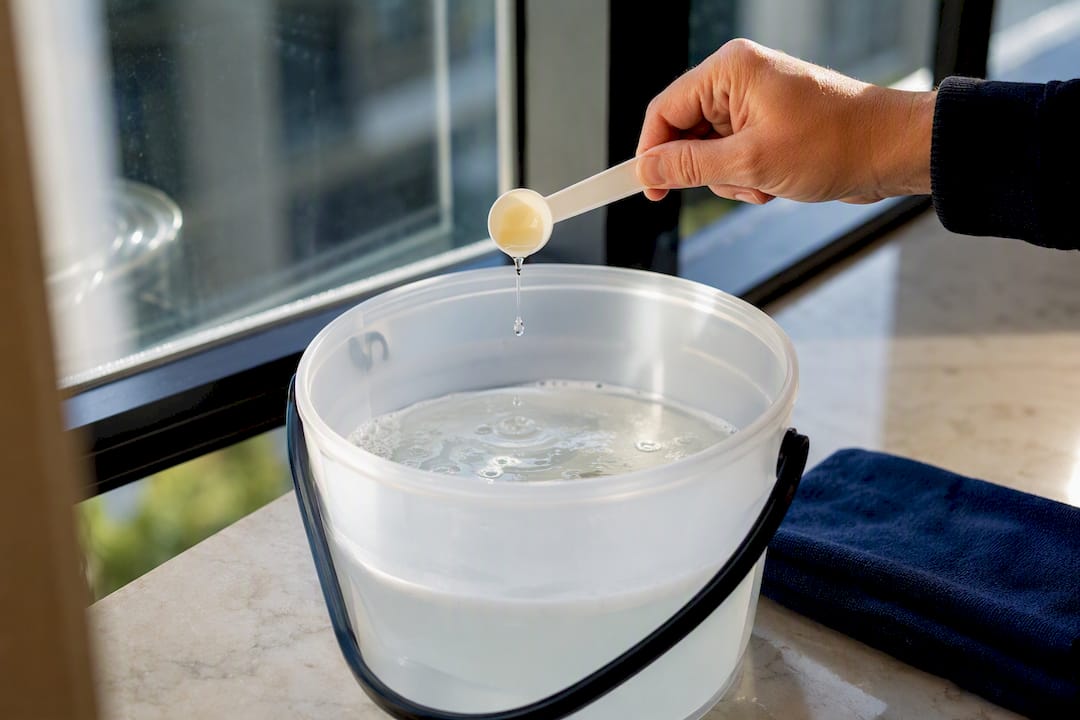
Measuring soap solution beside clean window
The fastest route to streak-free windows is a quality rubber squeegee, dish soap measured to a quarter teaspoon per litre of distilled or soft water, and a shaded work session. Grab a squeegee with a fresh blade, two microfibre cloths, and a bucket or spray bottle before you start. If ladders, second-storey glass, or a tight moving deadline make that unappealing, Shine Wise Cleaning's window cleaning service covers it instead.
***
TL;DR: - Use a high-quality rubber squeegee with a replaced blade for the cleanest results, as worn blades are the main cause of streaking. - Mix only a quarter teaspoon of dish soap per 4 liters of distilled or filtered water for a streak-free cleaning solution; more soap causes hazy films. - Avoid cleaning in direct sunlight or windy conditions, as these can cause the solution to dry too quickly and leave streaks. - For stubborn mineral deposits, apply a vinegar solution and rinse with distilled water to prevent chalky spots. - Consider hiring professionals for high or heavily stained windows, especially when safety, height, or tight schedules are involved.
***
Table of Contents
- Tools that actually prevent streaks
- Best DIY window cleaning solutions and exact measurements
- How do you clean windows without leaving streaks?
- Why do windows still streak after cleaning?
- When streak-free windows are a job for a professional
- Small habits that keep windows looking clean longer
- Book a professional window clean instead
- Sources
- FAQ
Tools that actually prevent streaks
The tool matters more than most people assume. A cheap plastic squeegee flexes unevenly and skips, leaving thin lines behind, while a proper rubber blade in the 12 to 14 inch range for standard panes glides in one clean pull. Check the blade edge every few uses by running a finger along it. If you feel a nick or a soft, curled edge, replace it. A worn blade is the single biggest cause of repeat streaking, no matter how good your solution is.
Checking rubber squeegee blade for damage
Microfibre cloths matter too, but not all microfibre is equal. Waffle-weave cloths lift grime better than plush pile, and both lose their streak-free edge fast if washed with fabric softener, which coats the fibres in a residue that transfers straight onto glass. For scrubbing, a T-bar scrubber or a car-wash style sleeve beats a kitchen sponge, which tends to smear grease rather than lift it.
Distilled water earns its keep in hard-water areas. If you notice a chalky film after your tap-water washes dry, that is mineral residue, and manufacturers recommend a final distilled or demineralised rinse to stop it forming.
- Squeegee: 12 to 14 inch rubber blade, replaced at the first sign of nicks
- Microfibre: waffle weave, washed without fabric softener
- Scrubber: T-bar or sleeve style, not a sponge
- Optional extras: a window vac or extension pole for upper storeys
Pro Tip: Keep a spare squeegee blade in your cleaning kit. Swapping a $5 blade takes thirty seconds and fixes more streaking problems than any product switch.
Powered tools like a window vac can speed up exterior jobs and cut drip mess, but their squeegee blades wear the same way manual ones do, and a worn vac blade streaks just as badly as a worn hand squeegee.
Best DIY window cleaning solutions and exact measurements
Two mixes cover almost every situation, as detailed in our best tips to clean your beautiful interior doors. For mineral deposits, hard-water spotting, or general grime, mix 1 part distilled white vinegar to 10 parts warm water, adding 2 to 3 drops of mild dishwashing liquid if the glass is particularly dirty. Go easy near stone or limestone sills, since vinegar's acidity can etch some natural stone over repeated exposure.
DIY window cleaning solution measurements
For everyday cleaning, use 4 litres of distilled or filtered water with a quarter teaspoon of clear dish soap. That measurement is not a suggestion. A precise, small amount of soap is what keeps the mix streak-free, because anything more leaves a greasy film that turns hazy the moment it dries.
In cold weather, add a splash of isopropyl alcohol to the mix. It lowers the freezing point and speeds up drying time, which matters when the mercury drops and evaporation slows to a crawl.
- Mineral deposits: 1 part vinegar to 10 parts warm water, plus 2 to 3 drops of dish soap for heavy grime
- Everyday clean: 4 litres water to a quarter teaspoon dish soap, no more
- Cold weather: a splash of isopropyl alcohol in either mix
Skip ammonia-based cleaners altogether. They are harsh on tinted films and low-E coatings, and ammonia-free alternatives deliver more consistent results across most modern glass types. If you're testing a commercial spray instead of mixing your own, Consumer Reports' testing found some products need far less elbow grease for a streak-free finish, but recommends trialling any new formula on a small, hidden section of coated glass first.
How do you clean windows without leaving streaks?
Follow this sequence and you will rarely need to go back over a pane twice.
- Prep the frame first. Vacuum the tracks and sills, dust the frame, and remove flyscreens if they come out easily. Skipping this step is how grit ends up scratched into the glass mid-wipe.
- Apply the solution generously. Use your scrubber or a soaked microfibre to work the mix across the entire pane, paying extra attention to corners where grime builds up.
- Rinse heavily soiled exterior glass with a hose before squeegeeing, so you are not dragging dirt across the pane with the blade.
- Start your squeegee stroke from the top corner, pulling straight down in vertical passes with roughly a one-inch overlap between each stroke. Wipe the blade dry with a cloth after every pass, since a dirty blade just redistributes grime as a new streak.
- Buff immediately with a dry microfibre, focusing on edges and corners where the squeegee cannot reach cleanly.
- Check your work at a low angle in indirect light, and from a second angle if you can, since faint streaks often hide from direct viewing.
For large panes, an extension pole keeps you off a ladder for longer stretches of glass, while a water-fed pole is worth considering for second-storey or hard-to-reach glass.
For small panes such as cottage-style windows, skip the squeegee entirely and use microfibre only, since a blade that size has nowhere to run cleanly.
Never lean out of an upper window or stand on the top rung of a ladder to reach the last corner of a pane. If a window genuinely needs you off the ground to finish safely, that is the point to stop and call a professional instead.
Pro Tip: Break large glass doors or big picture windows into sections rather than washing the whole pane at once. Working in smaller sections stops the solution drying before your squeegee catches up, which is one of the most common causes of streaks on big glass.
Why do windows still streak after cleaning?
A hazy, even film across the whole pane almost always means too much soap. Remix your solution at the correct ratio, rinse the glass with plain water, and re-squeegee. Streaks that run in a consistent pattern usually point to a damaged blade. Run a finger along the rubber edge and replace it if you feel any nicks or softening.
Chalky white spots that survive a normal wash are mineral deposits, not dirt. Treat them with a vinegar solution directly on the spot, let it sit for a minute, then rinse with distilled water and squeegee dry.
If streaks appear the moment the glass dries rather than during cleaning, the sun dried your solution before you could squeegee it off. Move to the shaded side of the house or wait for an overcast day, since direct sunlight is one of the most common causes of streaking.
- Even haze: too much soap, remix and rinse
- Consistent line pattern: check and replace the blade
- White chalky spots: vinegar spot treatment, distilled rinse
- Streaks appearing after drying: sun or wind dried the solution too fast
One handy trick for locating which side of the glass a streak sits on: wipe the inside horizontally and the outside vertically. Whichever direction the streak runs tells you exactly where to fix it.
When streak-free windows are a job for a professional
Some jobs are not worth the DIY risk. Windows above single-storey height, exteriors with years of built-up mineral staining, or end-of-lease cleans that need to meet a landlord's inspection checklist all favour bringing in a professional team.
A professional team uses cleaners vetted for reliability and detailed checklists, with eco-friendly product options available on request. A professional visit typically involves proper ladder stabilisers or access equipment, and a clear scope agreed upfront, whether that is windows only or part of a broader property clean.
A simple way to decide: if you need a ladder past the second rung, if the glass has stains that have not shifted after two attempts, or if you are on a tight lease handover deadline, book it rather than risk it.
Small habits that keep windows looking clean longer
Streak-free glass does not stay that way by accident. A quick wipe-down once a month, paired with a proper deep clean twice a year, stops grime building up to the point where you need a heavy scrub every time.
Looking after your tools matters just as much as the technique. Launder microfibre cloths without fabric softener, and check your squeegee blade before every session rather than waiting for streaks to tell you it is worn.
None of this replaces good judgement about safety. If a window needs a ladder, an extension pole beyond arm's reach, or an angle that feels unstable, that is the moment to hand it to a professional rather than push through.
- Shine Wise Cleaning Team
Book a professional window clean instead
If measuring soap to the quarter teaspoon and balancing on a ladder sounds like more effort than your Saturday has room for, that is exactly the gap Shine Wise Cleaning fills. Our teams bring the squeegees, the correctly diluted solutions, and the ladder stabilisers, and they work from a checklist so nothing gets missed, whether it is a single feature window or a full property before a lease handover.
Shinewisecleaning
Booking a professional makes the most sense when height, time, or a landlord's inspection standard is on the line. Trained cleaning teams handle window-only jobs as well as broader cleans, with eco-friendly product options available if that matters to your household. Get in touch through our window cleaning service page to check availability and get a quote for your property.
Sources
- How to Clean Windows Without Streaks, According to Cleaning Experts
- How to keep your windows and doors
- Glass cleaners we tested
FAQ
What is the best way to clean a window without leaving streaks?
Use a rubber squeegee with a fresh blade, a solution of distilled water with a quarter teaspoon of dish soap per 4 litres, and work in shade rather than direct sun.
What is the best window cleaner that leaves no streaks?
A homemade mix of 1 part vinegar to 10 parts warm water handles mineral spots well, while Consumer Reports' testing found some commercial cleaners need less effort for a streak-free finish, particularly on coated glass.
What do professional window cleaners put in their water?
Many professionals use plain distilled or demineralised water, sometimes with a small measured amount of dish soap, since distilled water avoids the mineral spotting that hard tap water leaves behind.
How do you make your windows crystal clear?
Squeegee top to bottom in overlapping vertical passes, wipe the blade after each stroke, and buff edges immediately with a dry microfibre cloth before the last of the moisture can dry into a streak.
Recommended
Related services
Ready to book your clean?
Free quote · No obligation · Canberra & Perth
Related articles
Buy a water fed pole or hire a pro window cleaner?
Decide between buying a water fed pole for DIY window cleaning or hiring professionals for a guaranteed, streak-free finish. Learn more!
Read articleHigh rise window cleaning safety: what facility managers must insist on
Ensure high rise window cleaning safety by demanding a detailed safety plan and certified operators before any work begins. Protect your assets.
Read article