
Match Your Entry Condition Report With Your Bond Clean: Canberra & Perth
Published: 29 August 2026 · By Shine Wise Cleaning Team, Founder of Shine Wise Cleaning · Updated: 29 August 2026
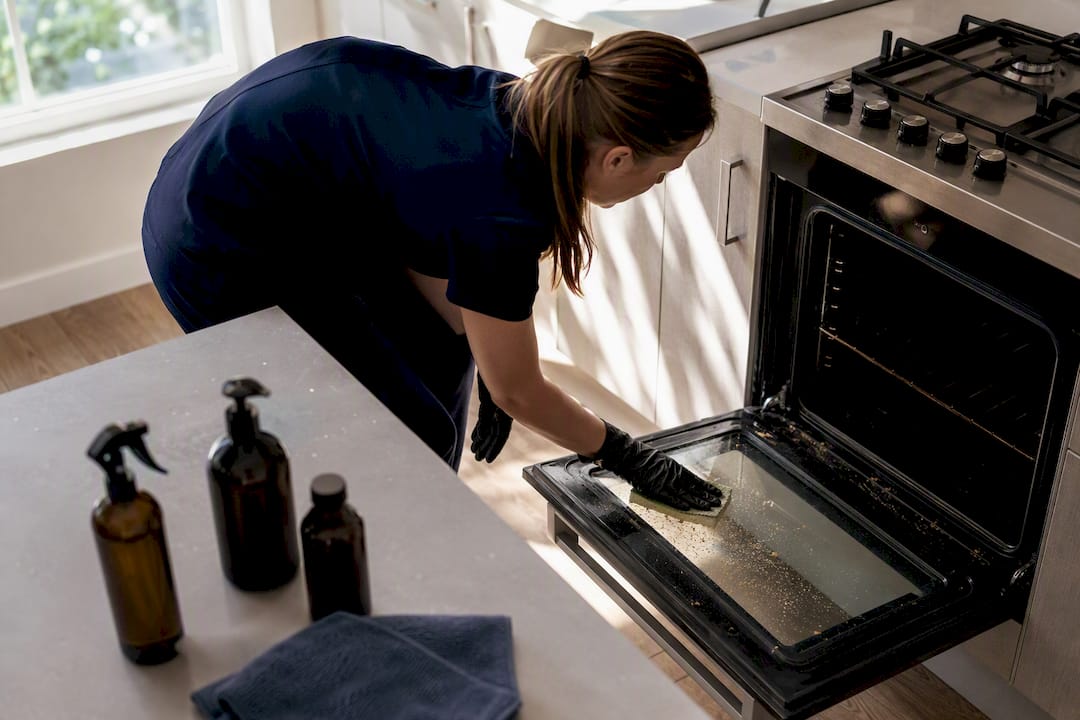
Cleaner scrubbing rental oven interior
A bond clean is a full end-of-lease deep clean that returns a rental property to the standard recorded on its entry condition report, minus fair wear and tear. Real estate agents use it as their benchmark when deciding whether to release your bond in full. Get it right and the money lands back in your account. Get it wrong, and you're arguing over deductions for weeks.
***
TL;DR: - A bond clean must meet the standard on the entry condition report, focusing on deep cleaning areas overlooked in routine tidying, with costs ranging from $250 to $900 depending on the property size. - Key inspection points include thoroughly cleaning oven interiors, window tracks, skirting boards, and carpets, especially those flagged as common failure spots by agents. - Documenting the cleaning process with photos, receipts, and a copy of the entry report is essential to prove compliance if disputes arise during the bond return process. - DIY cleaning requires about six to ten hours and specialized gear, but most inspectors flag issues like missed window tracks or unsteam-cleaned carpets, making professional services advisable. - State-specific regulations emphasize the importance of returning the property to its original condition, allowing for fair wear and tear, with clear procedures for resolving disputes through documentation and formal processes.
***
Table of Contents
- What is bond clean? Scope and how it differs from a regular tidy-up
- What's included in a bond clean, room by room
- DIY or professional: how to decide
- What does a bond clean cost, and how long does it take?
- How to actually get your full bond back
- Your room-by-room bond cleaning checklist
- What landlords and agents legally expect from you
- What to do when there's a dispute over your bond clean
- Does bond cleaning work differently in each state?
- Shine Wise Cleaning: what actually fails inspections
- Book a bond clean that protects your deposit
- Where to check the official rules
- Sources
- FAQ
What is bond clean? Scope and how it differs from a regular tidy-up
A bond clean isn't the same job as your usual Saturday clean. It's a legally anchored standard tied to the entry condition report you signed when you moved in, and the exit condition report your agent completes when you leave. The gap between those two documents, after allowing for fair wear and tear, is what determines whether your bond gets returned in full.
You'll hear this job called a few different things depending on where you live: bond clean, end-of-lease clean, exit clean, vacate clean. The name changes by state, but the obligation underneath it doesn't. Every version comes back to the same tenancy legislation principle: leave the place as you found it.
Fair wear and tear covers things like faded carpet from sun exposure or worn patches on high-traffic flooring. It does not cover grease build-up on stovetops, mould in bathroom grout, or a build-up of grime nobody's touched since the lease began. That distinction is where most disputes start.
What separates a bond clean from routine cleaning:
- It's assessed against a specific document (the entry condition report), not a vague idea of "clean"
- It covers areas most weekly cleans skip entirely, like extractor fans, window tracks and skirting boards
- It has a financial consequence attached: get it wrong and the agent can deduct cleaning costs from your bond
What's included in a bond clean, room by room
Most agents work from a fairly consistent inspection list, even if the exact wording changes between agencies. The RTA's guidance on vacating a property lays out the core expectations, and they map closely to what inspectors actually check on the day.
Kitchen: oven interior (including racks), stovetop and rangehood filters, inside and outside of cupboards, splashbacks, and the sink and taps free of limescale.
Bathroom and laundry: toilet, shower recess, bathtub, and grout scrubbed back to its original colour, plus exhaust fans wiped down and mirrors streak-free.
Living areas and bedrooms: floors vacuumed and mopped, walls spot-cleaned of marks, light switches and power points wiped, ceiling fans dusted, and skirting boards cleared of the dust that collects along the bottom edge.
Windows and fixtures: internal glass and window tracks (a classic inspection failure point), light fittings, and blinds or curtain rails.
Items regularly quoted as add-ons rather than standard inclusions:
- Curtain laundering or dry cleaning
- Exterior window washing (especially upper storeys)
- Heavy mould remediation beyond a standard scrub
- Rubbish or bulky item removal left behind after moving out
Ask your cleaner to confirm these upfront. A quote that looks cheap on paper can blow out fast once you realise the oven detail or carpet steam clean was never included.
DIY or professional: how to decide
A genuinely inspection-ready DIY clean on a standard two-bedroom unit usually takes six to ten hours if you're doing it properly, longer if the oven or bathroom grout has been neglected for a while. That's not a Sunday afternoon job. It's a full day, sometimes two, and it needs the right gear: an oven-safe degreaser, a grout brush, a decent vacuum with crevice attachments.
The mistakes inspectors flag most often on DIY cleans:
- Window tracks left with visible dirt because they're easy to miss
- Skirting boards skipped entirely, especially behind furniture
- Oven racks cleaned but the door seal and glass ignored
- Carpets vacuumed but not steam cleaned, when the lease requires it
- Extractor fans and exhaust vents left coated in dust
If you're weighing up a professional quote instead, check exactly what's inside it before you book. Confirm whether carpet cleaning means a vacuum or an actual steam clean (the two aren't interchangeable for inspection purposes), whether oven detailing is included or charged separately, and whether the company offers a re-clean guarantee if the agent flags something afterwards.
Pro Tip: Ask any cleaning company one direct question before booking: "If the agent isn't satisfied, do you come back for free?" A company that hesitates on that answer is telling you something.
A professional cleaning receipt is widely accepted by property managers as proof the work was done, but it isn't a guarantee against every deduction. If the agent's inspection notes flag a specific issue, the receipt alone won't override that. A re-clean clause matters more than the receipt itself.
What does a bond clean cost, and how long does it take?
Bond cleaning is typically the largest single cleaning-related expense in a move, and for good reason. Industry pricing across Australia generally runs between $250 and $900, depending on property size and what's added on.
Rough bands by property type:
- Small studio or one-bedroom unit: lower end of the range, often a few hours' work
- Standard two- to three-bedroom home: mid-range pricing, usually a half to full day
- Larger four-bedroom-plus house: upper end, sometimes requiring a two-person team for a full day
Add-ons that push the price up include heavily soiled ovens, carpet steam cleaning, exterior window washing, and rubbish removal left over from the move. None of these are unusual requests, but they're rarely bundled into a base quote automatically.
A quick reality check on pricing: the $250 to $900 range reflects genuine variation in property size and condition, not inconsistent pricing across the industry. A studio that's been well maintained sits at one end. A neglected four-bedroom house with a filthy oven and stained carpet sits at the other.
How to actually get your full bond back
Getting your bond back isn't just about how clean the property looks. It's about whether you can prove it, and whether that proof lines up with the standard set at the start of the tenancy.
- Pull out your entry condition report and read it properly. Any marks, stains or damage already noted there aren't your responsibility at exit. Compare photo to photo where you can.
- Photograph or film every room once cleaning is finished. Dated, timestamped images are your best evidence if a dispute ever comes up later.
- Keep every cleaning receipt, whether you paid a professional or bought supplies for a DIY job. The RTA specifically recommends holding onto copies of both reports and any receipts.
- Ask the agent for their exit inspection checklist ahead of time, and get any extras (like carpet steam requirements) confirmed in writing before the final walkthrough.
- If the agent flags an issue, request itemised written notes, not a vague "not clean enough" comment. That specificity is what lets you fix the actual problem or push back on it.
| Evidence type | Why it matters |
|---|---|
| Entry condition report | Sets the baseline you're being measured against |
| Exit condition report | What the agent compares your clean to on the day |
| Dated photos/video | Proves condition at handover if a dispute arises |
| Cleaning receipt | Accepted by most agents as proof work was completed |
If the agent still isn't satisfied after all that, most professional cleaners will send someone back under a re-clean guarantee before you need to escalate anything formally.
Your room-by-room bond cleaning checklist
Print this out or save it to your phone. Work through it in order, because the areas inspectors check first tend to be the ones DIY cleaners rush.
Kitchen
- Oven interior, racks, door glass and seals degreased
- Rangehood filter removed and washed separately
- Inside and outside of every cupboard and drawer
- Splashback, sink, and taps free of limescale and grease
Bathroom and laundry
- Grout scrubbed back to original colour, not just surface-wiped
- Shower screen, taps and drain free of soap scum
- Exhaust fan casing wiped down (dust builds up fast in these)
- Washing machine seal and lint filter cleaned if left behind
Living areas and bedrooms
- Skirting boards wiped along the entire length, including behind furniture
- Ceiling fans dusted on top of the blades, not just underneath
- Carpets vacuumed thoroughly, and steam cleaned if your lease requires it
- Walls spot-cleaned for scuffs and marks
Windows and fixtures
- Window tracks scraped and wiped, not just vacuumed
- Internal glass cleaned streak-free
- Light fittings dusted and any dead globes replaced
Pro Tip: Start with the oven and window tracks. They take the longest and they're the two spots agents check first, so knock them out while your energy's still fresh.
Note what's usually excluded: curtain laundering, exterior window washing above ground floor, serious mould remediation, and bulky rubbish removal. If any of these apply to your property, raise them with your agent or cleaner before the final walkthrough, not after.
What landlords and agents legally expect from you
Your obligation as a tenant isn't to make the property look brand new. It's to return it to the condition set out in the entry condition report, allowing for fair wear and tear. That distinction gets lost constantly, and it's worth understanding properly because it protects you from unreasonable deductions.
Agents can't legally charge you for pre-existing damage or normal ageing, things like sun-faded curtains, minor carpet flattening from furniture, or paint that's dulled slightly over a long tenancy. What they can hold you accountable for is neglect: built-up grime, stains from spills never cleaned up, or damage beyond normal use.
The practical expectation from most agents comes down to three things. First, the property should be presentable enough to show a new tenant immediately. Second, any specific clauses in your lease about carpet cleaning or professional cleaning need to be honoured exactly as written; if your lease specifies a professional carpet clean, a home vacuum won't satisfy that clause even if the carpet looks fine. Third, agents expect documentation, not just a verbal assurance that the work was done.
None of this is negotiable at the point of moving out. It's set at lease signing, and it's exactly why the entry condition report matters so much. If you disagree with something in that report when you first move in, that's the moment to raise it, not eighteen months later during your final inspection.
Tenant referencing entry condition report
What to do when there's a dispute over your bond clean
Disputes usually start the same way: the agent says the property isn't clean enough, you're confident it is, and now you're stuck. The first move is always to ask for specifics. A generic "not up to standard" comment isn't enough for you to act on, and you're entitled to ask exactly which areas fell short.
Once you have specifics, compare them against your entry condition report. If the agent is flagging something that was already there when you moved in, point to your report and any photos you took at the start of the tenancy. This is usually where a large share of disputes get resolved without going any further, because the paperwork settles the question outright.
If a professional cleaner did the work and something genuinely was missed, most reputable companies will send someone back to fix it under their re-clean guarantee rather than argue the point. That's usually faster and cheaper for everyone than an extended standoff.
If you can't reach an agreement, every state has a formal process for bond disputes, generally run through the relevant tenancy tribunal or bond authority. You'll need your entry and exit condition reports, dated photos, and your cleaning receipt as your core evidence. Tribunals lean heavily on documentation over verbal claims, which is exactly why keeping that paper trail from day one matters so much more than people expect.
Does bond cleaning work differently in each state?
The legal foundation is consistent across Australia. Every state ties bond return to condition reports and fair wear and tear. What changes is the terminology, the specific forms, and some procedural details around how disputes are lodged.
Queensland runs its process through the RTA, with clearly defined entry and exit condition report forms and a dedicated dispute resolution service. Other states use their own tenancy authorities and forms, though the underlying logic, compare exit condition to entry condition, doesn't change. Naming conventions also shift regionally: some agents say "bond clean," others say "vacate clean" or "exit clean," and these terms are used interchangeably depending on which state you're in.
The safest approach anywhere in the country is the same: check your specific state's tenancy authority website before you vacate, confirm the exact forms your agent will be using, and don't assume a checklist written for one state applies word-for-word in another. The core standard, bond clean benchmarked against the entry report, holds everywhere. The paperwork trail around it doesn't.
Shine Wise Cleaning: what actually fails inspections
We've seen the same five things trip tenants up again and again: window tracks left half-done, oven glass cleaned but the seals ignored, skirting boards skipped behind furniture, carpets vacuumed instead of steam cleaned when the lease required it, and extractor fans nobody thought to check.
Hands cleaning window tracks in rental
If you're short on time, tackle the oven and window tracks first. They're the two areas agents check hardest and the two most commonly rushed. Everything else is comparatively quick to fix if you've got an hour left on the clock.
Every job our teams complete comes with a dated receipt and before-and-after photos, because that documentation is exactly what protects you if an agent raises a question later. Our cleaners are police-checked, which matters when you're handing over keys to an empty property and trusting someone you've never met inside it.
- Shine Wise Cleaning Team
Book a bond clean that protects your deposit
Shine Wise Cleaning is the practical alternative to gambling six hours of your own weekend on a DIY clean and hoping it holds up at inspection. We run end-of-lease cleans across Canberra and Perth built around a checklist that mirrors what agents actually inspect, backed by a re-clean guarantee if anything gets flagged afterwards.
Shinewisecleaning
When you get a quote from us, ask exactly what a Canberra tenant should check before booking: whether carpet steam cleaning is included or priced separately, whether oven detailing covers racks and seals, and what the re-clean policy covers if your agent isn't satisfied first go. Every job comes with a dated receipt and photo documentation, so you've got the paper trail on hand if a dispute ever comes up. If you're moving out in Canberra or Perth, request a quote and lock in a booking date before your final inspection sneaks up on you.
Where to check the official rules
For state-specific forms and processes, the RTA Queensland's entry condition report page and its vacating a property guidance remain the clearest official references for understanding your bond obligations and the exact cleaning standard expected at handover.
Sources
- Starting a tenancy, entry condition report | RTA Queensland
- Bond cleaning Australia: Costs, rules & checklist | Book My Clean
- What is a bond clean? | The Bond Clean Book
FAQ
How much does a bond clean cost in Australia?
Most bond cleans across Australia fall between $250 and $900, depending on property size and any add-ons like carpet steam cleaning or heavy oven detailing.
Can I do a bond clean myself?
Yes, but budget six to ten hours for a standard two-bedroom property and pay close attention to window tracks, skirting boards and oven seals, since those are the spots inspectors flag most often.
Why is bond cleaning so expensive?
The cost reflects the scope of the job, not overpricing: it covers areas like oven interiors, grout, and window tracks that a regular clean skips, plus labour for jobs that often run a full day on larger properties.
Do I have to get a bond clean in QLD?
Queensland tenants aren't legally required to hire a professional cleaner specifically, but the RTA expects the property returned to its entry condition report standard, and how you achieve that, DIY or professional, is up to you.
Recommended
Related services
Ready to book your clean?
Free quote · No obligation · Canberra & Perth
Related articles
Top Tips for End of Lease Cleaning Perth in 2026
Get your bond back in full with these practical end of lease cleaning Perth tips tailored for renters in 2026.
Read articleSeasonal Cleaning Guide: End of Lease Cleaning Perth Done Right
Master your bond back with Perth-specific cleaning strategies that tackle seasonal challenges property managers actually check for.
Read article