Cleaning for allergies: what actually reduces symptoms
Published: 28 August 2026 · By Shine Wise Cleaning Team, Founder of Shine Wise Cleaning · Updated: 28 August 2026
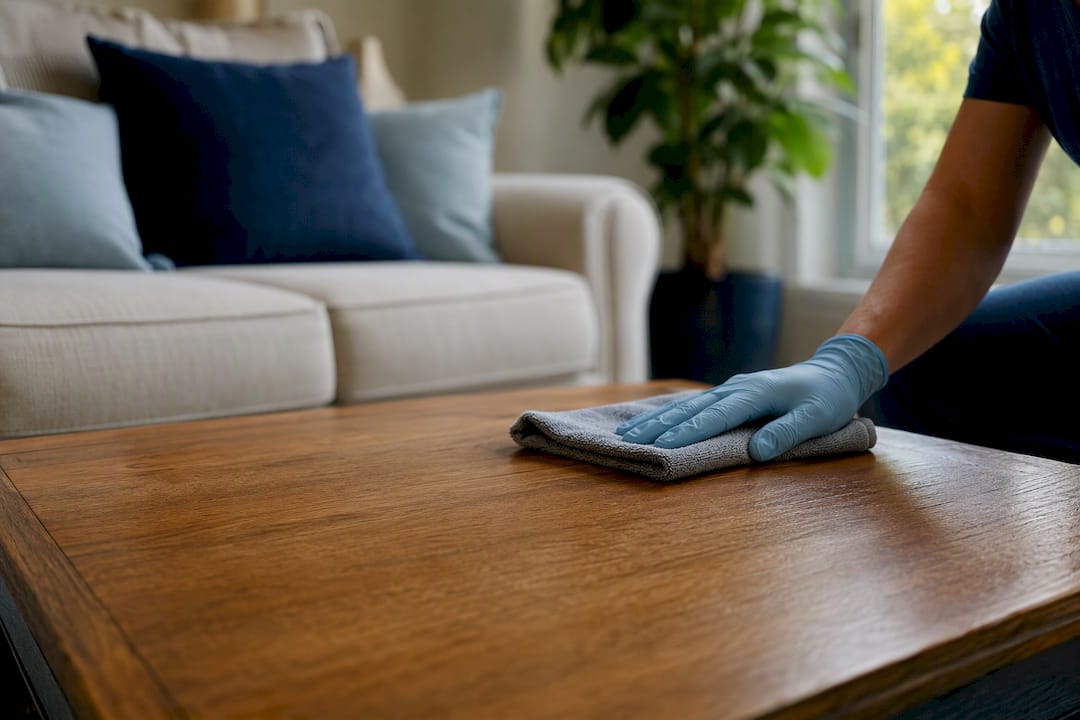
Hand wiping bedroom surface with microfiber cloth
Yes, cleaning for allergies works, but only if you target the right things. Hot-washing bedding at 60°C, keeping indoor humidity under 50%, and vacuuming regularly with HEPA-capable equipment are the three moves that make the biggest difference to dust mite and mould exposure at home. Get those three right before you worry about anything else. If the job is bigger than a weekend of DIY, Shine Wise Cleaning handles allergy-aware cleans across Canberra and Perth.
***
TL;DR: - Washing bedding at 60°C weekly is the most effective way to eliminate dust mites and their allergens from sleep environments. - Regular vacuuming with HEPA filters, combined with keeping indoor humidity below 50%, significantly reduces allergen buildup in living spaces. - Protecting mattresses, pillows, and box springs with dust-mite-proof encasements prevents allergen accumulation in soft furnishings. - Deep cleaning carpets, rugs, and upholstery periodically can lower embedded allergens, especially after water damage or heavy soiling. - Using fragrance-free, low-irritant cleaning products and maintaining proper airflow helps prevent exacerbating allergy symptoms during routine cleaning.
***
Table of Contents
- Room-by-room cleaning for allergies: where to start
- What laundry routine actually kills dust mites?
- Do air purifiers and HVAC filters help with allergies?
- How should you handle carpets, rugs and curtains?
- How do you find and remove mould safely?
- Which cleaning products won't make allergies worse?
- What's a realistic weekly and monthly allergy-cleaning schedule?
- Tools and techniques that stop allergens spreading further
- The gap between "clean" and "allergen-free"
- Book a professional allergy-focused clean
- Sources
- FAQ
Room-by-room cleaning for allergies: where to start
Allergens don't spread evenly through a house. Dust mites cluster in bedding and soft furnishings, mould loves bathrooms, and kitchens harbour their own moisture and pest issues. The Mayo Clinic's room-by-room approach is worth following room by room rather than trying to blitz the whole house at once.
Bedroom. This is where you spend a third of your day breathing the same air, so it earns the most attention. Encase your mattress, box spring and pillows in dust-mite-proof covers, wash bedding regularly, clear out soft toys and excess cushions, and keep pets off the bed and out of the room entirely.
Hands adjusting dust-mite-proof pillow cover on bed
Living room. Damp-dust surfaces from ceiling fans down to skirting boards, since dust settles everywhere in between. Vacuum upholstery and rugs weekly, and where you can, swap decorative cushions and throws for washable versions rather than dry-clean-only fabrics.
Kitchen. Moisture control matters here almost as much as in the bathroom. Clean fridge drip pans and door seals, where mould quietly builds, and store dry goods in sealed containers to stop pantry pests that trigger their own allergic reactions.
Bathroom. Run the exhaust fan during and after every shower, treat mould the moment you spot it, and fix leaking taps or grout before they become a bigger mould problem behind the tiles.
What laundry routine actually kills dust mites?
Water temperature is the variable that matters most, and most households get it wrong by washing on a cool, energy-saving cycle. Dust mites and the allergen they leave behind survive most standard washes, which is why the Australasian Society of Clinical Immunology and Allergy (ASCIA) recommends washing sheets, pillowcases and blankets weekly in water heated to at least 60°C.
That single temperature threshold does more for allergy relief than almost any other cleaning change you can make.
If your machine won't reach 60°C, or the fabric can't handle it, tea-tree or eucalyptus wash additives offer a workaround for a cold cycle. A hot tumble-dry for at least 10 minutes after washing achieves a similar kill rate.
- Wash sheets, pillowcases, blankets and doonas regularly
- Use dust-mite-proof encasements on mattress, box spring and pillows, and wipe them down monthly
- Skip the dry cleaner for allergy purposes: it kills dust mites but doesn't remove the allergen protein they leave behind, so hot washing still has to happen
Do air purifiers and HVAC filters help with allergies?
Filtration is a support act, not the main event. Removing allergens at the source (bedding, dust, damp) does more than any device, but the right equipment used correctly cuts down how much settles back into the air you breathe.
HEPA vacuums and air purifiers reduce how much fine particulate gets thrown back into the room during cleaning, which is exactly what a standard vacuum tends to do. Look for filters carrying independent certification for asthma and allergy suitability rather than a generic "allergen filter" label on the box.
- Change or clean HVAC and room air-purifier filters regularly, more often during periods of high pollen or smoke
- Set air conditioning to recirculate rather than draw in outside air during high pollen periods
- Keep relative humidity below 50% using a dehumidifier or better ventilation in damp rooms
- Vacuum slowly rather than fast, so the HEPA filter has time to actually trap particles instead of just stirring them
Pro Tip: Vacuum, then leave the room closed for around 20 minutes before going back in. Disturbed dust takes time to settle, and walking straight back into a freshly vacuumed room can undo a chunk of the benefit.
How should you handle carpets, rugs and curtains?
Soft furnishings hold onto allergens the way hard floors never do, which is why allergists consistently push people toward washable surfaces wherever it's practical. Hard flooring with washable rugs beats wall-to-wall carpet for allergy control, full stop. If ripping out carpet isn't on the table, weekly vacuuming with a small-particle or HEPA-rated machine, plus a seasonal professional steam clean, keeps embedded allergen levels down.
- Vacuum carpets and rugs regularly; steam clean periodically if allergies are a real issue in the house
- Wash removable cushion covers, pet beds and throws on a similar cycle to your bedding
- Freeze non-washable soft toys overnight, then vacuum or brush them outside, if you can't put them through a hot wash
- Prioritise professional carpet steam cleaning after water damage or heavy soiling, since embedded allergen at that depth won't shift with a domestic vacuum
How do you find and remove mould safely?
Mould triggers respiratory allergy symptoms just as reliably as dust mites, and it thrives in exactly the rooms most households neglect. Finding the moisture source matters more than the actual scrubbing.
- Treat small mould patches with detergent or a properly diluted bleach solution, following the product's own dilution guidance, then dry the surface completely
- Fix the moisture problem behind it: run bathroom exhaust fans every time, repair leaking pipes or windowsills promptly, and clear blocked gutters before they force water back into the roofline
- Run a dehumidifier in any room that stays consistently damp, particularly laundries and bathrooms without windows
- Call in professionals for mould that's spread through wall cavities, carpet underlay or across a large ceiling area. That's remediation, not a weekend job with a spray bottle
Which cleaning products won't make allergies worse?
Some cleaning products cause the very symptoms you're trying to fix, especially heavily fragranced sprays and aerosol dusters that put fine particles straight into the air you're breathing. Fragrance-free, low-irritant formulations are the safer default across the board.
The National Asthma Council Australia's Sensitive Choice program uses a blue butterfly logo on products an expert panel has reviewed specifically for asthma and allergy suitability, which takes the guesswork out of the supermarket aisle.
- Choose damp-dusting with a microfibre cloth over dry dusters or aerosol sprays
- Look for the blue butterfly Sensitive Choice logo when buying general cleaners
- Plain baking soda and diluted white vinegar handle most household jobs, from bench tops to bathroom grout, without the fragrance load of commercial sprays
Pro Tip: A microfibre cloth traps far more dust than a cotton rag because of its static charge. Dry-dusting with cotton just relocates dust from the shelf to the floor.
What's a realistic weekly and monthly allergy-cleaning schedule?
Consistency matters more than intensity. A modest routine kept up every week beats an exhausting deep clean done twice a year, because dust mite populations and mould spores rebuild fast once you stop.
- Weekly: Hot-wash bedding at 60°C, vacuum bedrooms and living areas with a HEPA-capable machine, damp-dust surfaces, empty bins, and check the bathroom for early mould signs
- Monthly: Change or clean HVAC and air purifier filters, wash curtains and throws, and deep clean upholstery or book a professional visit for it
- Seasonal: Arrange professional carpet steam cleaning, inspect for roof or window leaks and exterior moisture build-up, and rotate or check your mattress if the manufacturer recommends it
| Frequency | Key tasks | Why it matters |
|---|---|---|
| Weekly | Hot-wash bedding, vacuum, damp-dust, bin check | Dust mite and allergen levels rebuild within days |
| Monthly | Filter changes, curtain wash, upholstery clean | Filters lose efficiency; fabric traps allergen over time |
| Seasonal | Carpet steam clean, leak inspection, mattress check | Embedded allergen and hidden moisture need periodic deep intervention |
Tools and techniques that stop allergens spreading further
The tool matters almost as much as the technique, because the wrong equipment can undo a good cleaning routine in seconds. A feather duster or dry cotton rag doesn't remove dust, it launches it back into the air for you to breathe five minutes later.
Microfibre cloths, used damp, are the single best low-cost upgrade most households can make. The fibres physically trap particles through static attraction rather than pushing them around a surface. Pair that with a HEPA-rated or small-particle vacuum, and AAAAI's cleaning guidance recommends emptying canister vacuums outdoors rather than indoors, so the collected dust doesn't just get reintroduced into the room during the empty.
Gloved hand wiping dust with microfiber cloth
Vacuum slowly rather than fast passes, since it gives the filtration system time to actually capture fine particles instead of just skimming the surface. Work top to bottom in every room, dusting shelves and light fittings before you vacuum the floor, so settled dust ends up on the ground where the vacuum can catch it rather than resettling on a surface you've already cleaned.
If you're mid-renovation or replacing fixtures, be aware that building work throws enormous amounts of fine dust into the air for weeks afterward. Choosing low-dust materials and processes during a renovation can spare you undoing months of allergen-reduction work in a single project.
Order of operations sounds trivial, but it isn't. Clean from the top of the room down and from the far corner toward the door, so you're never walking back through an area you've already finished.
The gap between "clean" and "allergen-free"
Total elimination of dust mites isn't a realistic goal for any home, and clinical guidance backs that up plainly. The aim is exposure reduction, not eradication, and that distinction changes how you should think about your own cleaning routine.
Most people over-invest in visible cleaning (vacuuming floors, wiping counters) and under-invest in the two things that actually move the needle: laundry temperature and humidity. A house can look immaculate and still carry a heavy dust mite load in the bedding, because the mite and its allergen are invisible and the wash cycle was 30°C instead of 60°C.
Professional help earns its place at a specific point, not before. Extensive mould through wall cavities, water-damaged or saturated carpet, end-of-lease cleans with strict inspection standards, and large upholstery jobs all sit past what a domestic vacuum and a Sunday afternoon can fix. Shine Wise Cleaning runs every job to a checklist, uses police-checked teams, and offers eco-friendly product options where clients need them, which keeps outcomes consistent across house cleaning in Canberra jobs and Perth call-outs alike.
- Shine Wise Cleaning Team
Book a professional allergy-focused clean
Shine Wise Cleaning is the option for households that want the ASCIA-backed steps done properly without spending every weekend on it. Our teams handle hot-water bedding treatment, steam carpet cleaning, upholstery cleaning, mould spot treatment, and HVAC filter checks, using eco-friendly product options on request.
Shinewisecleaning
Every job runs against a fixed checklist rather than a mood on the day, and our teams are police-checked before they set foot in your home. We've completed work for more than 500 satisfied customers across Canberra and Perth, with flexible scheduling that fits around your week rather than the other way around. If mould, saturated carpet or heavy upholstery soiling is behind your symptoms, our carpet steam cleaning service and upholstery cleaning cover the deep-clean side, while our spring cleaning and one-off deep clean service resets a whole house in one visit. Moving out and need it done to inspection standard? Book our end of lease cleaning in Canberra service, or get a quote for your property today.
This article is general information, not a substitute for advice from a qualified doctor. Consult a qualified healthcare professional about your own circumstances before acting on anything here.
Sources
- Allergen minimisation, Australasian Society of Clinical Immunology and Allergy (ASCIA)
- National Asthma Council Australia partnership information, Healthdirect
- Allergy-proof your home, Mayo Clinic
FAQ
How do you clean a house if you have allergies?
Start with the highest-impact tasks: hot-wash bedding weekly at 60°C, vacuum with a HEPA-capable machine, damp-dust rather than dry-dust, and keep indoor humidity under 50% to limit dust mites and mould.
What are the symptoms of dust mites in the bed?
Dust mite allergy typically shows up as sneezing, a blocked or runny nose, itchy eyes, and worse asthma symptoms overnight or first thing in the morning, when you're closest to the mattress and pillow.
How can you manage a dust mite allergy?
Wash bedding weekly at 60°C or higher, use dust-mite-proof mattress and pillow encasements, vacuum regularly with a small-particle vacuum, and keep humidity below 50% since mites can't survive in drier air.
Are there natural remedies for allergies?
Vinegar and baking soda handle most household cleaning jobs without the fragrance load of commercial sprays, and simple steps like closed windows during pollen season and regular damp-dusting reduce exposure without relying on chemical products.
Does dry cleaning kill dust mites?
Dry cleaning kills dust mites but doesn't remove the allergen protein they leave behind, so items still need a hot wash or an allergen-neutralising treatment to actually clear the allergen itself.
Recommended
Related services
Ready to book your clean?
Free quote · No obligation · Canberra & Perth
Related articles
Pressure washing safety: what a professional should guarantee
Ensure pressure washing safety by choosing a pro that provides documented site walkthroughs, verified insurance, and effective methods.
Read articleHigh rise window cleaning safety: what facility managers must insist on
Ensure high rise window cleaning safety by demanding a detailed safety plan and certified operators before any work begins. Protect your assets.
Read article