
2-4hr Studio, 4-8hr 2BR End of Lease Cleaning Time in Australia
Published: 6 September 2026 · By Shine Wise Cleaning Team, Founder of Shine Wise Cleaning · Updated: 6 September 2026
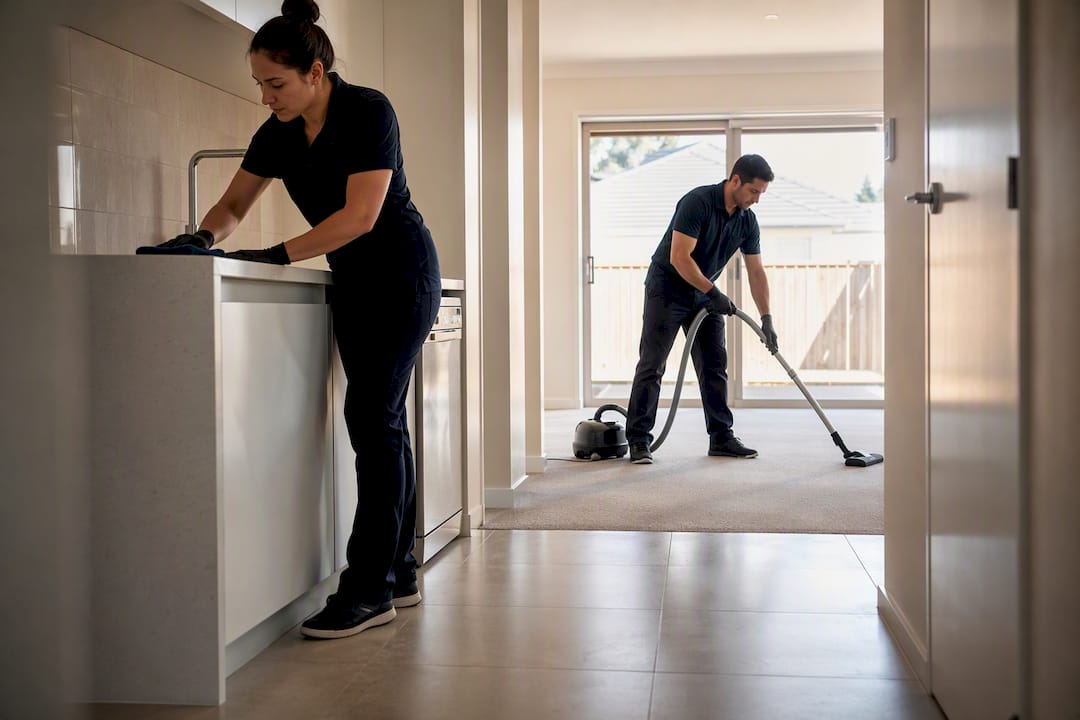
Cleaning team working across vacant rental rooms
A studio or one-bedroom unit typically takes 2 to 4 hours to clean to bond standard, a two-bedroom home runs 4 to 8 hours, and a three-bedroom-plus house can stretch to 8 to 12 hours or more. Those ranges shift with condition and extras like ovens or carpets. Professional teams cut the elapsed time by putting more cleaners on site at once, not by working faster per person.
***
TL;DR: - The actual cleaning time depends heavily on team size, property condition, and extras, with larger or neglected homes requiring significantly more hours. - Bathrooms, carpets, staircases, and clutter can add 30 to 60 minutes per bathroom or area, while heavy grime or odours can increase total time by 40% or more. - Using professional cleaning teams with multiple cleaners can reduce elapsed hours from 10-14 for a large house to under four, but quotes often vary based on staff numbers. - Preparing the property by clearing furniture and fixing small issues before cleaners arrive can save at least one hour per standard property, improving efficiency. - Add-on services like carpet steam cleaning or oven deep cleaning can extend total job time by 1 to 3 hours, so specifying these extras upfront helps avoid surprises.
***
Table of Contents
- How long does an end of lease clean take by property size?
- What factors add or subtract time from a bond clean?
- DIY versus professional cleaning: which saves more time?
- What preparation cuts cleaning time before the team arrives?
- How much extra time do add-on services take?
- What does Shine Wise Cleaning's local experience add to this picture?
- Why timing guides underestimate the human factor
- Book a Shine Wise clean that matches your actual move-out date
- Sources
- FAQ
How long does an end of lease clean take by property size?
Elapsed time depends far more on team size and condition than most tenants expect. A single cleaner working alone on a three-bedroom house might need ten hours, while three cleaners tackling the same job together can be done in under four. That's the gap between "labour hours" and "elapsed hours," and it's the number that actually matters when you're booking a slot before your lease ends.
Property size sets the baseline, but it's only the starting point. A 2 bedroom property commonly takes around 4 to 8 hours for a full bond clean, according to Australian rental guidance, with the wider end of that range reserved for homes with extra bathrooms, higher condition demands, or fussy real estate agents.
Here's how the numbers typically break down for a two-person team working a reasonably tidy property:
- Studio or 1 bedroom unit: 2 to 4 hours, including one bathroom and a small kitchen.
- 2 bedroom house or unit: 4 to 8 hours, depending on bathroom count and floor coverage.
- 3 bedroom house: 6 to 10 hours, especially with a second bathroom or a laundry that's seen heavy use.
- 4 bedroom or larger home: 10 to 14 hours, often requiring a third cleaner to keep the job to a single day.
Bathrooms are the biggest hidden cost in these estimates. Each additional bathroom typically adds 30 to 60 minutes on its own, because grout, shower screens, and tapware need scrubbing, not wiping. Multi-storey homes add time too, mostly from staircases and the extra walking between floors, and pets add another layer: shedding, scratched skirting boards, and odour treatment in carpets can tack on an extra hour even in an otherwise clean home.
Team size is where the maths gets interesting. If a job needs 12 labour hours total, one cleaner working solo takes 12 hours elapsed. Two cleaners split that to around 6 hours. Three cleaners, working different zones simultaneously, can bring it under 4 hours. This is why asking a provider "how many cleaners will be on site" matters just as much as asking "how many hours will it take." A provider who quotes a fast turnaround with a single cleaner is either underestimating the job or planning to rush it, and rushed jobs are exactly what fail bond inspections.
Comparison of cleaners and elapsed job time
Market cost guides put the overall span for end-of-lease cleans between roughly 2 and 8 hours for most standard properties, with larger or heavily used homes running beyond that. Treat any quote below those ranges with some scepticism unless the property is genuinely small and spotless.
What factors add or subtract time from a bond clean?
Condition matters more than size once you get past the basic square-metre estimate.
Three condition tiers are worth thinking about before you book:
- Tidy: regular cleaning throughout the tenancy, minimal buildup, standard time estimates apply.
- Average: some neglect in high-use areas (kitchen, bathroom), add 15 to 25% to baseline hours.
- Neglected: visible grime, stains, or odour throughout, add 40% or more, and expect the provider to flag it upfront.
Floor type changes the calculation too. Hard floors (tile, floorboards, laminate) clean faster than carpet, because mopping and vacuuming move quicker than the steam cleaning and drying time carpet demands. A home with carpet in every bedroom will always run longer than the same layout with floorboards throughout, purely from the extra equipment setup and drying window involved.
Appliances and fixed extras are where agents scrutinise hardest, and where time disappears fastest. Ovens with baked-on grease, rangehood filters clogged with years of cooking residue, and inside window tracks packed with dust are all disproportionately slow compared to their size. A dirty oven alone can add an hour to a job that would otherwise be straightforward.
Access and clutter matter just as much as grime. A property still full of furniture, boxes, or belongings takes longer to clean around, and cleaners moving items to reach skirting boards or floor edges burns time that clean, empty rooms don't require.
Statistic: Under the Cleaning Services Award pay guide, rostering and pay obligations shape how many staff a business can reasonably put on a job. This is part of why quotes vary so much between providers. A cheaper quote with fewer staff on site isn't necessarily worse value, but it usually means a longer day in your rental.
DIY versus professional cleaning: which saves more time?
DIY cleaning almost always takes longer in elapsed hours, even though it costs nothing upfront. A tenant working solo on a two-bedroom unit should budget significantly more time, potentially a full weekend, spread over multiple days, considering fatigue breaks and the difficulty of certain tasks.
Here's how the timelines typically compare for a standard two-bedroom property:
- DIY, one person: 10 to 14 hours across one or two days, plus additional time if a re-clean is needed after inspection.
- DIY, two people (flatmates or family): 6 to 9 hours, assuming both parties commit fully and don't need to work around each other in small rooms.
- Professional, two-person team: 4 to 8 hours, same day, using commercial-grade equipment and a checklist built around agent expectations.
- Professional, three-person team: Under 4 hours for most standard homes, useful when you're on a tight settlement deadline.
Professional teams don't just work faster individually. They add cleaners to run zones in parallel, and they carry commercial extraction equipment for carpets that would take a renter hours longer with a rented machine. That combination is why hiring makes the most sense when your timeline is genuinely tight, when your bond is large enough that a failed inspection is expensive to fix, or when the property has items like oven interiors or window tracks that most people don't clean often enough to do quickly.
Pro Tip: Split the job. Handle the light, low-skill tasks yourself, wiping down cupboards, decluttering, taking out rubbish, in the days before the clean, and let the professional team focus purely on the high-scrutiny items: ovens, bathrooms, carpets, and windows. This can shave an hour or more off the professional booking and reduce your quote, because the team spends less time on tasks that don't need commercial-grade tools.
DIY versus professional cleaning: which saves more time?, overview diagram
What preparation cuts cleaning time before the team arrives?
The single biggest lever you control is what the property looks like when the cleaners walk in. A property cleared of furniture and boxes lets a team move straight to cleaning surfaces instead of working around your belongings, and checklists across the industry consistently point to clearing rooms before cleaning as one of the most reliable ways to cut time.
Seven days out:
- Start decluttering room by room, donating or binning anything you're not taking.
- Remove picture hooks, nails, and wall fixtures, and patch obvious holes if your lease requires it.
- Run any small fixes, loose cupboard handles, sticky drawers, so cleaners aren't working around broken fittings.
- Book your cleaning slot now if you haven't already. Move-out weeks fill fast, and move-out guidance recommends leaving at least two to three days between your clean and your final inspection, so a rushed job never becomes your only option.
Forty-eight hours out:
- Empty the fridge and freezer completely, and give them an initial wipe so the cleaning team isn't starting from a full defrost.
- Pre-treat any obvious carpet stains if you're not booking a professional steam clean, or flag them clearly if you are.
- Clear bathroom cabinets and vanity surfaces of all toiletries and personal items.
- Take blinds, shutters, and curtains down if they need separate care. Guidance on caring for plantation shutters is worth a look if you're leaving them behind and want them presentable for inspection.
On the day:
- Make sure there's clear vehicle access and parking close to the property for the cleaning team's equipment.
- Remove fragile or valuable items before the team arrives, even if they're staying, so nothing risks damage during the clean.
- Confirm key handover and any building access codes or lift bookings the night before, not the morning of.
- Do a final walk-through with your own checklist so nothing gets left in a drawer or cupboard the team assumed was empty.
Clearing furniture and boxes ahead of time can cut professional elapsed time by an hour or more on a standard property, simply because cleaners spend that hour cleaning instead of shifting your belongings out of the way. For a room-by-room breakdown tailored to local rental standards, Shine Wise Cleaning's end of lease cleaning checklist for Canberra walks through exactly what agents in the ACT tend to check first.
How much extra time do add-on services take?
Standard cleaning covers surfaces, floors, and general grime, but the services that actually decide bond outcomes are usually the extras. Knowing their rough time cost helps you build a realistic quote instead of being surprised by it.
- Carpet steam cleaning: roughly 20 to 40 minutes per room, plus drying time that doesn't require a cleaner on site but does affect your handover timing if the agent wants to inspect dry carpet.
- Oven cleaning: 30 minutes for a lightly used oven, up to 90 minutes for one with heavy baked-on grease that needs a soak-and-scrub approach.
- Inside window and balcony cleaning: 15 to 30 minutes per window depending on access, more for second-storey units where security screens need removing first.
- Deep wall cleaning or mould treatment: this can become a multi-hour specialist job on its own, particularly in bathrooms with poor ventilation history, and it's worth flagging to your provider before the quote rather than after.
Statistic: Provider data suggests adding carpet steam cleaning or an oven clean typically increases total job time by 1 to 3 hours depending on condition, which is exactly why timed, itemised quotes matter more than a single flat number. Ask for the extras broken out separately so you know what's driving the hours, and by extension the price.
What does Shine Wise Cleaning's local experience add to this picture?
Shine Wise Cleaning runs end-of-lease teams across Canberra and Perth, with police-checked cleaners and a checklist built around what agents in each city actually look for at inspection. That local grounding matters, because a Canberra agent's expectations around, say, ducted heating vents or courtyard areas differ from what a Perth property manager checks for pool area access or aircon filters. A significant number of completed jobs have shaped the checklists used by some cleaning teams.
A few things the team consistently sees make the biggest difference to booked hours:
- Properties cleared of belongings before arrival reliably finish faster than jobs where cleaners are moving boxes as they go.
- Giving an accurate room count and condition description at booking, rather than a rough guess, produces a far more reliable time and staff estimate.
- Flagging carpets, ovens, and window access needs upfront lets the office schedule the right number of cleaners from the start, instead of discovering mid-job that a third person is needed.
Pro Tip: When you book, mention if you want extra staff to guarantee a same-day finish. Requesting a three-person team upfront for a larger property is almost always cheaper than paying for a rushed return visit because a two-person crew ran out of daylight.
Tenants who work through a structured checklist before the clean, rather than tidying at random, consistently need less time from the paid team. Shine Wise Cleaning's Canberra checklist and its companion piece on what to expect and how to save both walk through this in more detail than a general guide can.
Why timing guides underestimate the human factor
Most cleaning time guides treat a bond clean as a fixed-size problem: plug in the square metres, get a number. That's not how it actually works. The condition variable swings the estimate more than bedroom count ever does, and conventional advice rarely says this plainly enough.
The gap between what a two-hour quote promises and what a neglected kitchen actually demands is where most tenant disputes start. Cheap, fast quotes aren't dishonest so much as optimistic, based on a "tidy" property that may not match reality by moving day.
If you take one thing from this guide, prioritise preparation over price shopping. A cluttered, unprepared property will cost more time and money with any provider, while a cleared, well-flagged booking lets even a modest two-person team finish on schedule. The condition tiers and prep timeline covered above matter more to your final bill than which company's logo is on the invoice.
Book a Shine Wise clean that matches your actual move-out date
Shine Wise Cleaning builds its end-of-lease service around getting bond-ready results on the schedule your lease actually gives you, not a generic slot that assumes every property is identical.
Shinewisecleaning
When you book, tell the team your property size, bedroom and bathroom count, and any extras you need, oven, carpets, inside windows, so the quote reflects the right number of cleaners and an accurate time window rather than a rough guess that blows out on the day. Flag access notes too: parking, key handover, building codes. Those small details are what let a two or three-person team turn up ready to work instead of losing the first twenty minutes figuring out logistics. If your property sits in Canberra, the Canberra bond cleaning page has local inclusions and booking specifics, and Perth tenants can check the Perth bond cleaning page for the same. Get a quote sorted early, before the last-week rush eats your preferred slot.
Sources
- Cleaning Services Award pay guide | Fair Work
- End of lease clean cost guide | Airtasker
- Apartments
- Rental advice and regional listings | Domain
FAQ
Can I do end of lease cleaning myself?
Yes, but budget considerably more time than a professional job, typically 10 to 14 hours for a two-bedroom property across one or two days, and be honest about whether you can meet agent standards on ovens, carpets, and grout without commercial equipment.
What is the 20-minute rule of cleaning?
It's a general household tidying method where you spend 20 minutes on a single area before moving on, useful for everyday upkeep but not a reliable guide for bond cleaning, which needs task-based time estimates for ovens, carpets, and bathrooms rather than fixed time blocks.
How much does end-of-lease cleaning typically cost in Australia?
Cost tracks closely with time. Most standard homes fall in the 2 to 8 hour range, with extras like carpet steam cleaning or oven detailing adding to both the hours and the final price.
How much is a 2 hour clean?
A 2 hour booking generally suits a small, already tidy studio or one-bedroom unit with minimal extras. Most two-bedroom or larger properties need more than 2 hours to meet bond standards, especially with multiple bathrooms or carpet throughout.
How long for an end of lease clean on a larger family home?
A four-bedroom-plus home typically needs 10 to 14 hours, often requiring a three-person team to finish within a single day rather than spilling into a second.
Recommended
Related services
Ready to book your clean?
Free quote · No obligation · Canberra & Perth
Related articles
Start 7-14 Days Early: Australia Real Estate Cleaning Checklist
Inspector focused room by room end of lease checklist for Australia. Use a 7-14 day timeline, dated photos and invoices, or book Shine Wise.
Read articleMatch Your Entry Condition Report With Your Bond Clean: Canberra & Perth
Make your bond clean pass inspection. Match entry and exit condition reports, keep dated photos and receipts, and use an inspection-ready checklist for...
Read article