
Protect Your Bond: Steam Mop vs Spin Mop for Property Managers
Published: 1 September 2026 · By Shine Wise Cleaning Team, Founder of Shine Wise Cleaning · Updated: 1 September 2026
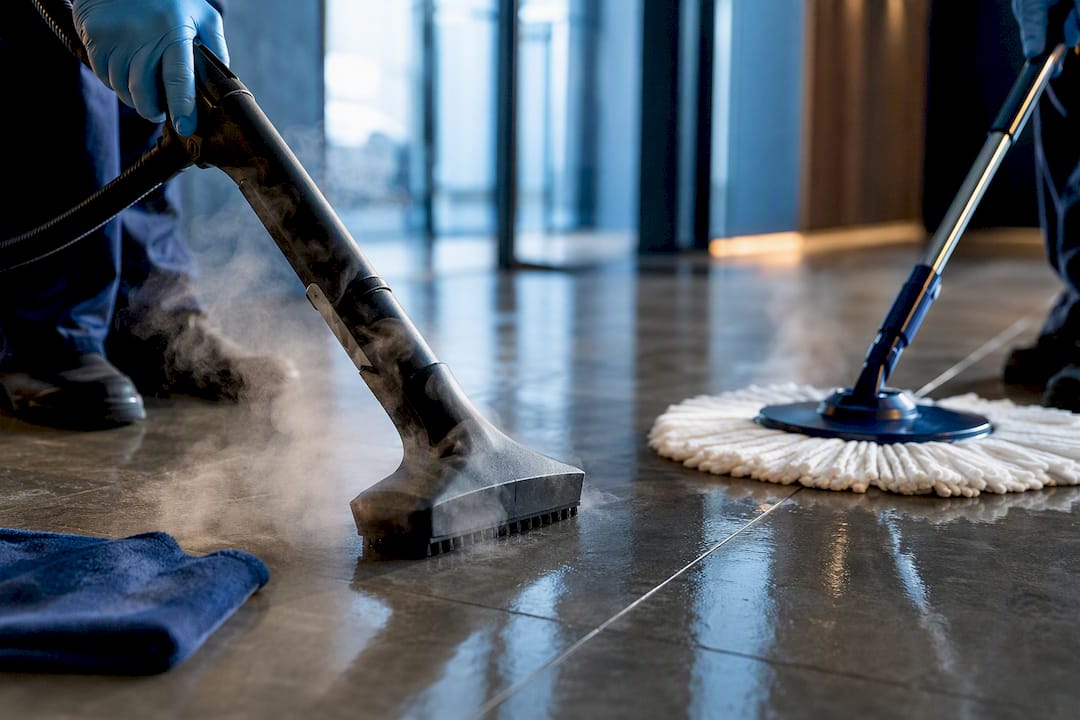
Steam and spin mop tools on commercial flooring
For sanitising sealed tile and grout, book a professional steam clean. For daily maintenance, spill control and timber or laminate floors, book a trained spin-mop or manual clean. Floor material makes the call, not preference. Shine Wise Cleaning runs both methods and matches the tool to the surface on every job.
***
TL;DR: - Steam cleaning is suitable only for sealed, water-resistant surfaces like ceramic, porcelain, vinyl, and linoleum, but not for porous or soft floors such as hardwood or natural stone. - Manual cleaning with pH-neutral solutions is more effective for removing grease, oil, and large spills, and is safer for delicate floors to prevent warping or damage. - Steam cleaning reduces bacteria but does not kill more germs than proper soap and warm water, making it ideal for hygiene but not superior in sanitization. - For end-of-lease cleaning, use steam on tiles and grout, and manual, gentle cleaning on timber or laminate to avoid costly damage. - Preparation involves sweeping or vacuuming debris before cleaning, as dirt left on the surface can cause scratches or interfere with deep cleaning methods.
***
Table of Contents
- Steam cleaning vs spin-mop cleaning: how the two methods actually work
- Which floors suit steam and which need a manual clean?
- Which method should you book for common cleaning jobs?
- What should you expect once a cleaner arrives?
- How Shine Wise Cleaning decides which method to use
- Book the right cleaning method with Shine Wise Cleaning
- Sources
- FAQ
Steam cleaning vs spin-mop cleaning: how the two methods actually work
Commercial steam cleaning forces water past boiling point inside a sealed tank, then pushes vapour through a nozzle onto the floor. The heat lifts grime and loosens mineral deposits without needing much detergent, and professional units run hotter and longer than anything sold for home use, reaching grout lines and sealed joints that consumer machines skip over, according to a comparison of DIY and professional steam equipment. Operators also adjust contact time on each surface, which improves sanitisation without soaking the floor.
Spin-mop and manual cleaning works differently. A cleaner uses a pH-balanced solution matched to the floor type, then agitates it mechanically with a mop head or scrubbing pad to break up grease, sand and stains. It handles a wider range of contaminants because the solution can be changed for the job, whereas steam is just hot water.
Here's where the two genuinely differ on results:
- Sanitisation: Choice testing found steam mops clean well and reduce chemical use, but don't kill more bacteria than soap and warm water applied properly.
- Grease and oil: manual cleaning with the right detergent outperforms steam, since steam sanitises without replacing detergent-based degreasing.
- Large spills: steam can't mop up standing liquid the way a manual mop or wet vacuum can, per the same Choice findings.
- Speed: manual cleaning starts immediately; steam needs a heat-up cycle first.
Many operators run both in sequence rather than picking one exclusively, which lines up with regional comparisons recommending a layered approach: manual for the daily grind, steam for the periodic deep clean. A wet-dry vac or targeted spot treatment often fills the gap either method leaves behind.
Which floors suit steam and which need a manual clean?
Get this wrong and you risk warping, whitening or delaminating a floor a landlord expects back in original condition. The rule of thumb is simple: hard, sealed, water-resistant surfaces tolerate steam; anything with an organic core or a soft finish doesn't.
- Sealed ceramic and porcelain tile: steam is generally safe and works especially well on grout lines, per Choice's steam mop guidance.
- Vinyl and linoleum: usually fine with either method, though manufacturer care sheets sometimes restrict heat exposure on older or budget-grade vinyl.
- Hardwood, engineered timber and laminate: avoid steam entirely; moisture and heat swell timber fibres and can lift laminate seams. Use pH-neutral manual cleaning instead.
- Natural stone and marble: favour pH-neutral solutions and limit steam use, since some sealants and stone types react poorly to sustained heat, a point echoed in independent steam-versus-traditional comparisons.
Before any booking, check three things: the condition of the existing finish, the manufacturer's own care instructions, and whether a small patch test in a hidden corner shows any discolouration or lifting.
Pro Tip: If you're not certain what sealant or finish is on a stone or timber floor, tell the cleaner to default to manual, pH-neutral cleaning first. Reversing steam damage costs far more than a slower clean.
Which method should you book for common cleaning jobs?
Matching the method to the job matters more than picking a favourite tool. Here's how it breaks down for the jobs property managers and tenants actually book:
- End-of-lease cleans: request steam on sealed tile and grout to meet hygiene expectations, but insist on manual, pH-neutral cleaning for timber, laminate and any delicate finish. Check the Shine Wise Cleaning end-of-lease checklist covers both.
- Kitchens: manual degreasing first, since steam alone won't cut through cooking oil, then an optional steam pass over tiled areas for sanitisation.
- Bathrooms and grout: steam is usually the better call for hygiene, but flag any stone tile or bench so the cleaner stays cautious with heat.
- High-traffic entryways: routine spin-mop maintenance handles daily grit, with a periodic steam deep clean to reset grout and hard-water buildup.
- Offices and strata common areas: set a cadence, frequent manual visits for upkeep, steam scheduled less often for sanitisation where sealed hard flooring allows it.
What should you expect once a cleaner arrives?
A good booking starts before the cleaner walks in. Vacuum or sweep loose debris, lift small furniture off the floor, and move fragile items out of the work area. Choice's own guidance on sweeping first applies whether the crew is bringing a steam unit or a mop bucket. Skip this step and loose grit gets ground into grout or scratched across a sealed finish.
Timing differs between the two methods. Steam equipment typically needs two to six minutes to heat up and may need refilling on larger floor areas, while manual cleaning starts straight away but leaves more surface moisture that takes longer to dry.
Pricing usually moves on a handful of factors:
- Total floor area and number of rooms
- Soil level, including grease buildup or long-neglected grout
- Whether both methods are needed, or just one
- Travel distance and total staff time on site
Before booking, ask what trust signals the provider offers: police-checked staff, an itemised checklist matched to landlord or agent standards, some form of service guarantee, and eco-friendly product options. These separate a serious operator from someone with a mop and a van.
How Shine Wise Cleaning decides which method to use
How Shine Wise Cleaning decides which method to use, overview diagram
We assess the floor before we assess the schedule. Sealed tile and grout get steam where sanitisation is the goal; timber, laminate and stone default to pH-neutral manual cleaning unless the finish clearly tolerates more. That decision runs against the same checklist standard our teams use for landlord and agent requirements, because a method that damages a floor costs everyone more than the clean itself.
Every team is police-checked, and every job follows that checklist from start to finish. We keep scheduling flexible and offer eco-friendly options, and where a job genuinely needs both approaches, we run them in sequence rather than forcing one tool to do a job it was never built for.
- Shine Wise Cleaning Team
Book the right cleaning method with Shine Wise Cleaning
Shine Wise Cleaning is the option that removes the guesswork readers just worked through. Rather than hoping a generalist cleaner picks the right method for your grout, timber or tiled kitchen, you tell us the floor type and the job, and our police-checked teams apply steam or manual cleaning accordingly, backed by a checklist built around landlord and agent standards.
Shinewisecleaning
If you're preparing for a move-out, our end of lease cleaning service covers Canberra and Perth and follows that same checklist for bond returns. For grout, tile and carpet work specifically, our carpet and steam cleaning service handles the heavier sanitisation jobs. When you book, note the floor types in your brief, sealed tile, timber, stone, vinyl, so we can confirm the right method before the crew arrives. Get in touch for a quote and mention any delicate surfaces upfront.
Sources
Findings on sanitisation limits and flooring safety come from Choice's steam mop testing and its steam mop dos and don'ts. For prep steps, see our deep cleaning checklist and common steam cleaning mistakes.
- Choice, steam mops vs regular mops
- Choice, steam mop dos and don'ts
- Clean Living UAE, steam cleaner vs spin mop
FAQ
Is steam cleaning better than spin-mop cleaning for hygiene?
Steam cleans effectively and needs less chemical, but Choice testing found it doesn't kill more bacteria than soap and warm water applied correctly.
Can steam cleaning damage hardwood or laminate floors?
Yes. Heat and moisture can swell timber fibres and lift laminate seams, so professional cleaners use pH-neutral manual methods on these surfaces instead.
Should I request steam or manual cleaning for an end-of-lease clean?
Request steam for sealed tile and grout, and manual, pH-neutral cleaning for timber or laminate; Shine Wise Cleaning's checklist applies both where the floor plan calls for it.
How long does a professional steam clean take compared to a manual mop?
Steam equipment needs roughly two to six minutes to heat up and may require refilling on larger areas, while manual cleaning starts immediately but leaves more moisture to dry.
Do I need to prepare the floor before the cleaner arrives?
Sweep or vacuum loose debris and move small furniture and fragile items clear of the work area, since grit left on the floor can scratch finishes or grind into grout during cleaning.
Recommended
Related services
Ready to book your clean?
Free quote · No obligation · Canberra & Perth
Related articles
Carpet Steam Cleaning Canberra: Mistakes to Avoid
Avoid costly carpet damage by knowing what really goes wrong with steam cleaning in Canberra homes before you book.
Read articleSeasonal Carpet Steam Cleaning Canberra Guide
Canberra's wild seasonal swings make carpet steam cleaning essential — here's how to do it right, every time of year.
Read article