Get a printable commercial cleaning checklist that actually works
Published: 22 August 2026 · By Shine Wise Cleaning Team, Founder of Shine Wise Cleaning · Updated: 22 August 2026
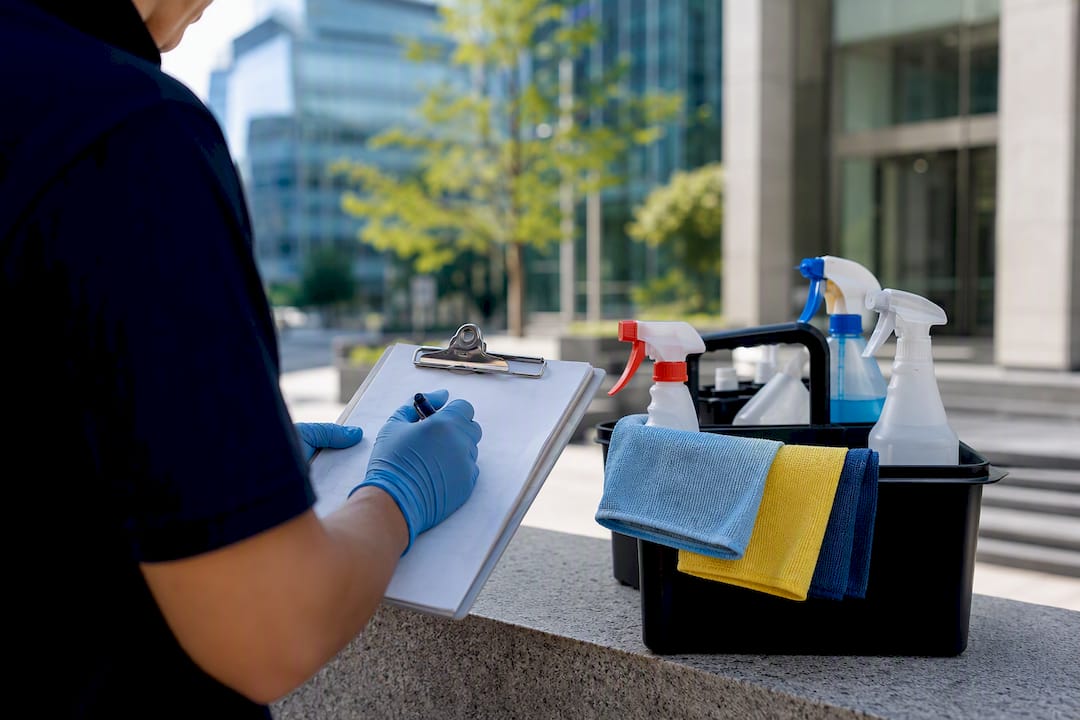
Hand holding commercial cleaning checklist clipboard
A proper commercial cleaning checklist gives you three things in one document: a daily task list for high-touch disinfection, restroom sanitation and waste removal, a weekly and monthly schedule for deeper work, and a sign-off row your team or contractor initials in at the end of each shift. You can download this structure as a PDF for wall-mounting, an Excel sheet for tracking, or a Word file for building into a contract.
Print it, assign each row to a person or shift, and pin it where the cleaning happens. The three daily non-negotiables are:
- High-touch disinfection, desks, handles, light switches, shared equipment
- Restroom sanitation, every visit, not just when it looks dirty
- Waste management, bins emptied, liners replaced, bulk waste flagged
Every solid template also includes a supplier scope section and a supervisor sign-off column, because a checklist without accountability is just a wish list.
Key Takeaways
Consistent commercial cleaning depends on matching each task to the right frequency, assigning clear ownership, and backing every visit with a signed audit trail.
| Point | Details |
|---|---|
| Use the three-tier model | Assign every task to daily, weekly, or monthly frequency so nothing gets skipped or duplicated. |
| Disinfect high-touch surfaces daily | Desks can carry roughly 400 times more bacteria than a toilet seat, so daily disinfection is non-negotiable. |
| Build area-by-area lists | Break reception, workstations, breakrooms, restrooms, floors, and windows into separate task lines. |
| Write a real scope of work | Cover site details, tasks, frequencies, products, exclusions, and sign-off to prevent disputes. |
| Pair the checklist with a professional team | Shinewisecleaning runs signed scopes and police-checked staff across office, builders, and carpet cleaning in Canberra and Perth. |
Table of Contents
- What is included in a commercial cleaning checklist: the three-tier frequency model
- Area-by-area checklist for every zone in your building
- Printable templates and downloads: choosing the right format
- How to build a scope of work from your baseline checklist
- The post-construction punch-list: rough, final, and touch-up phases
- Tools, products, and PPE worth recording in your scope
- Quality control, audits, and how re-cleans should actually work
- Training and certification recommendations for cleaning staff
- What we've learned running checklists on real contracts
- Booking a contractor who follows the checklist, not just holds one
- Sources
- FAQ
What is included in a commercial cleaning checklist: the three-tier frequency model
Most disputes between facility managers and cleaning contractors come down to one thing: nobody agreed on how often a task should happen. The fix is a three-tier frequency model, and it's the backbone of every decent commercial cleaning checklist worth using.
Daily tasks cover anything the public touches or sees. That means:
- Wipe and disinfect desks, phones, keyboards, and shared workstations
- Sanitise restroom fixtures, restock consumables, and mop floors
- Empty all bins and replace liners
- Spot-clean glass doors, entryways, and reception counters
- Vacuum high-traffic carpet zones and dust-mop hard floors
Office desks can harbour roughly 400 times more bacteria than a toilet seat. That single statistic is why disinfection of desks and shared equipment sits at the top of every daily list, not the bottom.
Weekly tasks stop grime from becoming a bigger job. Think detailed dusting above eye level, disinfecting door handles and light switches beyond the daily wipe, cleaning glass partitions, and vacuuming under furniture.
Monthly tasks protect the assets you've already paid for. Hard floors typically need regular machine scrubbing at monthly intervals, and carpet in high-traffic zones benefits from extraction cleaning every one to three months rather than waiting for visible wear. Skip this tier and you're not saving money, you're deferring a bigger floor-replacement bill to next year.
Area-by-area checklist for every zone in your building
A workable template breaks the building into zones rather than one long undifferentiated list. Copy these lines straight into your own document and adjust frequencies to match your foot traffic.
Reception and entryways
- Disinfect counters, door handles, and light switches (daily, cleaner)
- Vacuum or shake out entry mats (daily, cleaner)
- Wipe glass doors and sidelights (daily/weekly, cleaner)
- Deep-clean mats and check for trip hazards (monthly, supervisor check)
Workstations and shared offices
- Disinfect desks, phones, and keyboards (daily, cleaner)
- Empty desk bins (daily, cleaner)
- Dust monitors, shelving, and partitions (weekly, cleaner)
- Steam-clean carpet tiles (monthly or quarterly, contractor)
Breakrooms and kitchens
- Wipe benches, sinks, and microwave interiors (daily, cleaner)
- Disinfect fridge handles and shared appliance buttons (daily, cleaner)
- Deep-clean fridge interior and cupboard fronts (weekly, cleaner)
- Descale kettles and coffee machines (monthly, cleaner)
Restrooms
- Sanitise toilets, basins, and taps (daily, minimum once per shift)
- Restock soap, paper, and sanitiser (daily, cleaner)
- Disinfect partition doors and dispensers (weekly, cleaner)
- Deep-scrub grout and tile joints (monthly, contractor)
Floors and windows
- Sweep and mop hard floors (daily, cleaner)
- Vacuum carpeted zones (daily, cleaner)
- Machine-scrub hard floors (monthly, contractor)
- Clean interior glass and window sills (monthly, contractor)
Frequently touched items like door handles, keyboards, and phones warrant daily disinfection regardless of which zone they sit in, since they're the fastest route for germs to move between staff.
Printable templates and downloads: choosing the right format
The file format you pick should match the job it's doing, not just habit. PDF works best for a laminated site copy pinned in a cleaning cupboard. Excel is better for a rolling schedule you tick off and export monthly for audits. Word suits a scope document you'll edit and attach to a signed contract. Industry guides consistently point to this PDF, Word, and Excel split as the standard delivery format facility managers expect.
Whichever format you choose, the template needs these columns:
- Task description
- Frequency (daily, weekly, monthly)
- Assigned to (cleaner, supervisor, or contractor)
- Completion tick or initials
- Notes field for issues or exceptions
- Supervisor sign-off
Pro Tip: Date-stamp every version of your template in the filename (e.g. "OfficeChecklist_v3_Mar26") so nobody's ticking boxes on an outdated scope during an audit.
How to build a scope of work from your baseline checklist
A checklist tells cleaners what to do. A scope of work tells everyone, including the contractor and your finance team, what's covered, what isn't, and what happens when something goes wrong. Six sections make a scope of work dispute-proof:
- Site details (address, access hours, security requirements)
- Task list by area (pulled straight from your checklist)
- Frequencies for each task
- Product and equipment requirements
- Exclusions (what's not covered)
- Sign-off conditions and reporting process
Facility size and foot traffic dictate real changes to frequency. A 40-person open-plan office might need daily disinfection and weekly carpet vacuuming; a 400-person call centre running three shifts needs disinfection twice daily and nightly bin runs. Compliance-heavy sites, like anywhere handling food or medical waste, need documented frequencies, not verbal agreements.
Typical exclusions: exterior window cleaning above ground level, upholstery deep-cleaning, and pest control. A reasonable re-clean clause reads something like: report within 24 hours, contractor re-cleans within 48 hours, no charge for genuine misses.
The post-construction punch-list: rough, final, and touch-up phases
Builders cleans fail when everyone treats it as one job instead of three. The phased approach used by construction-cleaning specialists breaks it into rough clean (bulk debris, dust suppression, protective film removal), final clean (detailed surface work), and touch-up (post other-trades polish before handover).
Final-detailing tasks typically include:
- Removing stickers and protective film from fixtures and glass
- Fine dust extraction from vents, sills, and light fittings
- Interior glass cleaning, inside and out where accessible
- Grout and tile joint cleaning in wet areas
HEPA-filtered vacuums matter here because standard vacuums just recirculate fine construction dust. New finishes need protective coverings until the final walkthrough, which should happen with the site supervisor present, checklist in hand, before anyone signs off on handover. Our construction cleaning service runs this exact phased structure for builders and project managers.
Tools, products, and PPE worth recording in your scope
Your scope document should name equipment categories, not just "cleaning supplies." At minimum: microfibre cloths and colour-coded mop systems (to avoid cross-contamination between restrooms and kitchens), a HEPA-filtered vacuum for dust-sensitive environments, and a floor scrubber for large hard-floor areas.
Colour-coded microfiber cloths and mop bucket
On products, note pH-neutral cleaners for stone and timber surfaces, and specify disinfectant type for restrooms and food areas since not every disinfectant is rated for both.
PPE requirements (gloves, eye protection for chemical use) and chemical storage rules belong in the scope too, especially for sites with compliance obligations.
Pro Tip: Ask any contractor quoting your job whether they offer lower-toxicity or fragrance-free product lines. It's a fair question, and a good sign if they answer without hesitation.
Quality control, audits, and how re-cleans should actually work
Daily sign-off and supervisory audits do different jobs. Daily sign-off is the cleaner or shift lead initialling the checklist confirming tasks are done. A supervisory audit is a separate person checking a sample of that work against a standard, and it should happen weekly at minimum, monthly for lower-risk sites.
- Cleaner completes daily checklist and initials each section
- Supervisor audits a rotating sample of areas weekly, checking restrooms, high-touch surfaces, and floor condition
- Any miss gets logged with a photo and timestamp
- Facility manager has a defined reporting window (typically 24 hours) to flag issues
- Contractor re-cleans within an agreed timeframe (commonly 48 hours) at no extra charge
Sign-off rows and a routine audit cadence built into the template from day one are what actually make this workflow enforceable rather than aspirational.
Training and certification recommendations for cleaning staff
A checklist is only as good as the person executing it. Staff should understand not just what to clean but why certain sequences matter, like cleaning from the cleanest surface to the dirtiest to avoid spreading contamination, or using the correct dwell time for a disinfectant rather than wiping it off before it's worked.
Cleaner spraying disinfectant on door handle
Baseline training should cover chemical safety and correct dilution ratios, colour-coded equipment systems to prevent cross-contamination between zones, correct PPE use for the products on-site, and manual handling for equipment like floor scrubbers.
Beyond onboarding, look for cleaners with recognised infection-control training, especially for sites handling food service or healthcare-adjacent work. Police checks matter too, particularly for after-hours access to offices where staff are working alone in someone else's building overnight.
Refresher training every six to twelve months keeps standards from drifting, and it's worth documenting who's completed what. If an audit flags a repeated miss, "was this person trained on that task" is the first question a facility manager should be able to answer.
What we've learned running checklists on real contracts
We build a tailored checklist for every site because a hospitality venue and a strata office block don't share the same risk profile. Police-checked teams and a signed audit trail give facility managers something to point to when something goes wrong. If your internal team is stretched thin or an audit keeps flagging the same gaps, that's usually the point to bring in a contractor rather than patch the roster again.
Booking a contractor who follows the checklist, not just holds one
Plenty of businesses write a great checklist and still get inconsistent results, because the document is only as reliable as the team executing it. Shinewisecleaning runs office cleaning and commercial contracts in Canberra and Perth against a signed scope of work, with police-checked teams and a supervisor sign-off on every visit, so the paperwork in this article actually matches what happens on-site.
Shinewisecleaning
If your building just came off the tools, our construction cleaning crews run the rough, final, and touch-up phases covered above. Carpet due for its quarterly extraction? Carpet steam cleaning in Canberra fits straight into the monthly tier of your checklist. Flexible scheduling means cleaning happens before or after your team arrives, not in the middle of a workday. If you'd rather compare a few local providers first, Atelier Maids is another option worth a look. When you're ready, request a quote and we'll build the scope around the checklist you've already drafted.
Sources
Daily disinfection guidance draws on Bond University's workplace hygiene research. Downloadable templates are hosted on the Shinewisecleaning site.
- Our workplaces are filthy, and it's costing us all
FAQ
What is the 20/10 rule for cleaning?
It's a time-management technique where you clean intensively for short intervals then rest or switch tasks, mainly used for personal or light commercial spaces rather than full facility contracts.
What is the 6 to 10 cleaning list?
There's no single standardised industry definition for this term; if you've seen it referenced elsewhere, check what specific tasks that source lists before applying it to your own scope.
What are the 7 stages of cleaning?
Definitions vary by industry, but a common version moves from dry dusting and debris removal through to disinfection, rinsing, drying, and a final inspection or sign-off.
What is a standard commercial cleaning checklist?
A standard checklist assigns high-touch disinfection, restroom sanitation, and waste removal to daily frequency, with detailed dusting and glass cleaning weekly, and floor scrubbing or carpet extraction monthly.
How do I customise a checklist for my building?
Adjust frequencies based on foot traffic, staff hours, and compliance needs, then attach the checklist to a signed scope of work with exclusions and re-clean timelines, which is how Shinewisecleaning structures every commercial contract.
Recommended
Related services
Ready to book your clean?
Free quote · No obligation · Canberra & Perth
Related articles
Office cleaning checklist: daily, weekly and monthly template
Keep your office spotless with our comprehensive cleaning checklist. Boost hygiene and reduce sick days with daily, weekly, and monthly tasks.
Read articleA practical warehouse cleaning checklist for busy managers
Streamline your operations with a practical warehouse cleaning checklist. Ensure safety and efficiency through daily, weekly, and monthly tasks.
Read article