5 Spots Inspectors Check: Restaurant Cleaning Checklist for Operators
Published: 2 September 2026 · By Shine Wise Cleaning Team, Founder of Shine Wise Cleaning · Updated: 2 September 2026
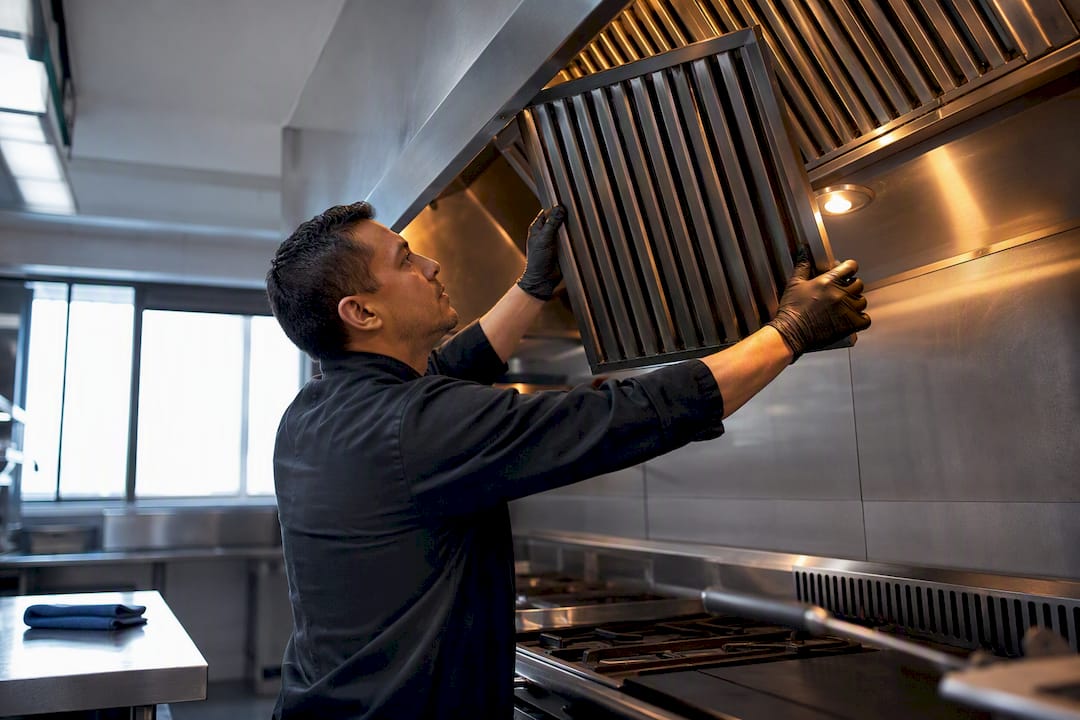
Cleaner inspecting restaurant extraction hood filter
A restaurant cleaning checklist works only when every line item names four things: the area, how often it gets cleaned, who's responsible, and the method or chemical used. Split tasks into daily, weekly and monthly bands, then back each one with a signature. Without documentation and a two-level sign-off, from staff and manager, you've got a wish list, not a system inspectors will trust.
***
TL;DR: - Clear documentation of task owner and responsible sign-offs reduces the risk of uncompleted cleaning tasks during inspections. - Regular contractor scheduling for hood degreasing, grease trap pump-outs, and refrigeration maintenance ensures compliance and prevents costly failures. - Staff accountability is reinforced through a detailed matrix listing each task, its frequency, method, chemical used, and responsible person. - Front-of-house cleaning focuses on visible hygiene, such as floor and table sanitation, with weekly deep cleaning to maintain reputation. - Proper chemical handling requires following the sequence of clean, rinse, and sanitize, testing sanitiser concentration, and storing chemicals safely.
***
Table of Contents
- Back-of-house checklist: daily, weekly and monthly tasks
- Front-of-house checklist: daily, weekly and monthly tasks
- Restroom and staff hygiene: daily checks that matter most
- Deep-clean and maintenance: when to bring in a contractor
- How to build a cleaning schedule with real accountability
- Chemical safety, PPE and sanitiser concentration
- Health inspection readiness: the quick walkround
- Printable templates and tools you can use today
- How Shine Wise applies this checklist in commercial cleaning contracts
- Why most restaurant checklists fail before they're even used
- Sources
- FAQ
Back-of-house checklist: daily, weekly and monthly tasks
Kitchens live and die on repetition, not heroics. Get the daily rhythm locked in and the rest follows.
Daily (10 to 45 minutes per task, usually split across opening, mid-shift and closing crews):
- Sanitise all food-contact surfaces, cutting boards and prep tables between tasks and at close.
- Run the dishmachine through a full cycle check, including rinse temperature and detergent levels.
- Empty and reline all waste bins, then hose down the bin area.
- Sweep and mop kitchen floors, paying attention to under-equipment zones where grease pools.
Weekly (30 to 90 minutes, usually assigned to a senior kitchen hand):
- Clean oven interiors and racks.
- Boil out fryers and filter or replace oil.
- Delime steamers, coffee machines and any equipment prone to mineral build-up.
- Clear and flush floor drains to stop slow leaks and odour.
Monthly (often contractor territory):
- Degrease exhaust hoods, or book a certified hood cleaner if grease has built past a light film.
- Service and descale ice machines.
- Check and clean condenser coils on refrigeration units.
Standard food safety practice guidance treats this daily/weekly/monthly split as the baseline for compliance, and it maps neatly onto a kitchen's actual workload, heavy daily contact tasks up front, mechanical maintenance further out.
Front-of-house checklist: daily, weekly and monthly tasks
Diners judge hygiene by what they can see, so front-of-house tasks carry more weight than their time cost suggests. A five-minute table wipe does more for your reputation than an hour spent scrubbing a walk-in nobody sees.
Daily (roughly 30 to 60 minutes total, spread across shifts):
- Sanitise tables, menus and condiment bottles between covers.
- Sweep and mop dining floors, with extra attention near the host stand and entry mats.
- Spot-check restrooms every two to three hours during service.
Weekly (20 to 40 minutes, often rostered to a rotating FOH staffer):
- Dust light fixtures, vents and high shelving.
- Clean glass doors, windows and mirrors.
- Vacuum and spot-clean booth upholstery.
Monthly:
- Deep clean or shampoo carpets and heavy upholstery.
- Inspect walls and ceilings for grease haze or mould near the kitchen pass.
Rotate these jobs across your FOH roster rather than parking them all on one person. It stops fatigue and gives every staff member a stake in how the dining room looks.
Restroom and staff hygiene: daily checks that matter most
Restrooms get inspected harder than almost anything else in the building, because inspectors know they're a proxy for how seriously you take hygiene overall.
- Check and restock soap, paper towels and toilet paper at least twice daily, more during peak service.
- Sanitise toilets, sinks and door handles every two to three hours.
- Require handwashing at shift start, after breaks, after touching raw proteins, and after any glove change.
- Log handwash station checks (soap levels, water temperature, working sanitiser) on the same sheet as your kitchen checklist, not a separate one that gets forgotten.
A handwashing sink with no soap is one of the fastest ways to fail an inspection outright, and it's entirely preventable with a five-second glance each shift.
Deep-clean and maintenance: when to bring in a contractor
Some jobs simply aren't a mop-and-bucket exercise. Exhaust hoods and grease traps are the two most common failure points in commercial kitchens, and both carry fire safety and environmental compliance obligations that go beyond ordinary tidiness. A properly structured cleaning protocol extends equipment life and heads off the kind of catastrophic failure, grease fires, refrigeration breakdowns, that costs far more than the maintenance itself.
- Hood and duct systems: certified contractor, typically quarterly for high-volume kitchens, light services at regular intervals in between.
- Grease traps: scheduled pump-outs rather than waiting for a backup, since emergency callouts cost more and often mean closing a station.
- Refrigeration coils and compressors: contractor inspection every six months, more often in older units.
- Keep every service certificate on file. Inspectors ask for them, and so will your insurer if something goes wrong.
Pro Tip: Book your hood cleaning contractor on a recurring calendar reminder, not a "we'll get to it" basis. Deferred hood maintenance is the single most common reason kitchens fail a fire inspection.
How to build a cleaning schedule with real accountability
A checklist without a system behind it is just paper. Building an enforceable schedule takes three moves.
- Build the matrix. List every task down one column, then frequency, method, chemical and the named person responsible across the row. A written matrix like this is the clearest evidence an inspector can use to judge your sanitation system, because it shows intent, not just outcome.
- Use two-level sign-off. The staff member who does the task initials it. A manager then verifies the area, separately, before the shift ends. This two-step check is what stops "pencil-whipping", ticking a box without doing the work, and it's the difference inspectors notice fastest when they ask to see records.
- Choose your format and review cadence. Printed sheets work fine for single-site operators; digital checklists earn their keep once you're running multiple venues, since they create an automatic audit trail and export to PDF or CSV for inspection or insurance requests. Either way, review the whole schedule after any inspection, menu change or equipment swap, because tasks that aren't explicitly assigned are the ones most likely to get skipped.
Get an adaptable printable commercial cleaning checklist and rework it around your own kitchen layout rather than starting from a blank page.
Chemical safety, PPE and sanitiser concentration
Get the sequence wrong here and you either leave bacteria behind or leave chemical residue on food-contact surfaces, both fail an inspection for different reasons.
- Follow clean, then rinse, then sanitise, in that exact order, on every food-contact surface.
- Test sanitiser concentration with test strips regularly rather than trusting the dispenser's default dial.
- Label every secondary container clearly, and never decant one chemical into a bottle that previously held another without a full clean and fresh label.
- Never mix cleaning products, especially bleach and ammonia-based cleaners, and wear gloves and eye protection where the label calls for it.
- Store chemicals away from food storage areas, and keep Safety Data Sheets accessible to every shift, not locked in an office.
Health inspection readiness: the quick walkround
Run this order before any inspector arrives, or just as a monthly habit: hood filters, floor drains, ice machine interior, behind wheeled equipment, then restrooms. These five spots collect grime fastest and get missed most often. Have sign-off sheets, service certificates and sanitiser logs ready to hand over, that paperwork often matters as much as what's visibly clean.
Printable templates and tools you can use today
A daily sheet only needs four columns: task, initials, time completed, and a notes field for anything unusual. That's enough for a single-site kitchen to run cleanly.
- Print separate sheets for opening, mid-shift and closing blocks so nobody's chasing one crowded page.
- Switch to a digital checklist once you're managing more than one site, since the audit trail and PDF or CSV export save real admin time.
- Rebuild your checklist whenever you add equipment or change the menu; a fryer or a new prep station means new tasks that didn't exist last month.
How Shine Wise applies this checklist in commercial cleaning contracts
Shine Wise Cleaning runs police-checked teams across Canberra and Perth, and every job follows a tailored checklist built around the venue's actual layout and equipment, not a generic template. Restaurant clients typically outsource the jobs that need certified handling or overnight timing: large monthly deep cleans, hood and grease trap servicing, and full site resets after a big event or before a health inspection. Over 500 clients have used that structure to keep commercial kitchens and dining rooms compliant, with eco-friendly product options built in where requested.
If you're briefing a contractor for any of this work, put three things in writing: exact service scope, whether a certificate of service will be provided, and the expected completion window. Shine Wise's office and commercial cleaning service handles recurring and periodic deep cleans for hospitality venues on exactly this basis, and it's worth structuring your own restaurant's contractor brief the same way.
How Shine Wise applies this checklist in commercial cleaning contracts, overview diagram
Why most restaurant checklists fail before they're even used
The conventional advice on restaurant cleaning checklists spends too much time on what to clean and not nearly enough on who's accountable when it doesn't happen. A checklist with no named owner per line item is the most common reason tasks slip, not laziness, just ambiguity about whose job it was. Fix that first, before you worry about which sanitiser strip to buy.
Checklist tasks mapped to accountable owners
The second gap is sign-off discipline. Plenty of kitchens have a checklist pinned to the wall that gets initialled without the work being done, because nobody's checking. Two-level sign-off, staff initials plus manager verification, isn't bureaucracy for its own sake. It's the one control that actually changes behaviour, because staff know someone's going to look.
If you're building or fixing a checklist today, start with the matrix: task, frequency, method, chemical, owner. Then add the second signature line before you worry about laminating anything. Everything else, the templates, the digital tools, the contractor schedule, sits on top of that foundation. Get it wrong and no amount of deep cleaning saves you at inspection time.
- Shine Wise Cleaning Team
Sources
Food Standards Australia New Zealand's food safety practices guidance sets out the daily/weekly/monthly framework used throughout this checklist. For certified hood and grease trap work, look for contractors with fire-code compliance credentials in your state. Shine Wise's deep cleaning checklist maps directly onto monthly and contractor-level tasks like hood degreasing and refrigeration servicing.
- Facility Management Insights, Your ultimate 10‑point commercial kitchen cleaning checklist for 2026
- TrainedTeam, Commercial kitchen cleaning schedule template
FAQ
What is the 20/10 rule for cleaning?
The 20/10 rule is a time-management technique, clean intensively for 20 minutes then rest or reset for 10, rather than a food-safety standard. It's more suited to general tidying than commercial kitchen sanitation, which runs on fixed task frequencies instead.
What are the 7 stages of cleaning?
Definitions vary by industry, but a common commercial kitchen version runs: pre-clean, main clean, rinse, sanitise, final rinse, drying, and a final equipment check before service resumes. Some frameworks combine or split these steps differently.
What is the daily 6 cleaning list?
There's no single universal "daily 6" standard, but most restaurant checklists cover six recurring daily jobs: food-contact sanitising, floor cleaning, waste removal, restroom checks, handwash station stocking, and dishmachine operation checks.
What should be on a cleaning checklist?
Every line should name the area, the frequency (daily, weekly or monthly), the method or chemical, and the specific person responsible, backed by a signature. Two-level sign-off, staff initials plus manager verification, is what makes the checklist template hold up during a health inspection.
Recommended
Related services
Ready to book your clean?
Free quote · No obligation · Canberra & Perth
Related articles
Cleaning for allergies: what actually reduces symptoms
Cleaning for allergies can significantly reduce symptoms. Learn targeted strategies like washing bedding and controlling humidity to improve your home.
Read articlePressure washing safety: what a professional should guarantee
Ensure pressure washing safety by choosing a pro that provides documented site walkthroughs, verified insurance, and effective methods.
Read article