
Science Based Uses for Homeowners & Renters: Vinegar or Baking Soda
Published: 5 September 2026 · By Shine Wise Cleaning Team, Founder of Shine Wise Cleaning · Updated: 5 September 2026
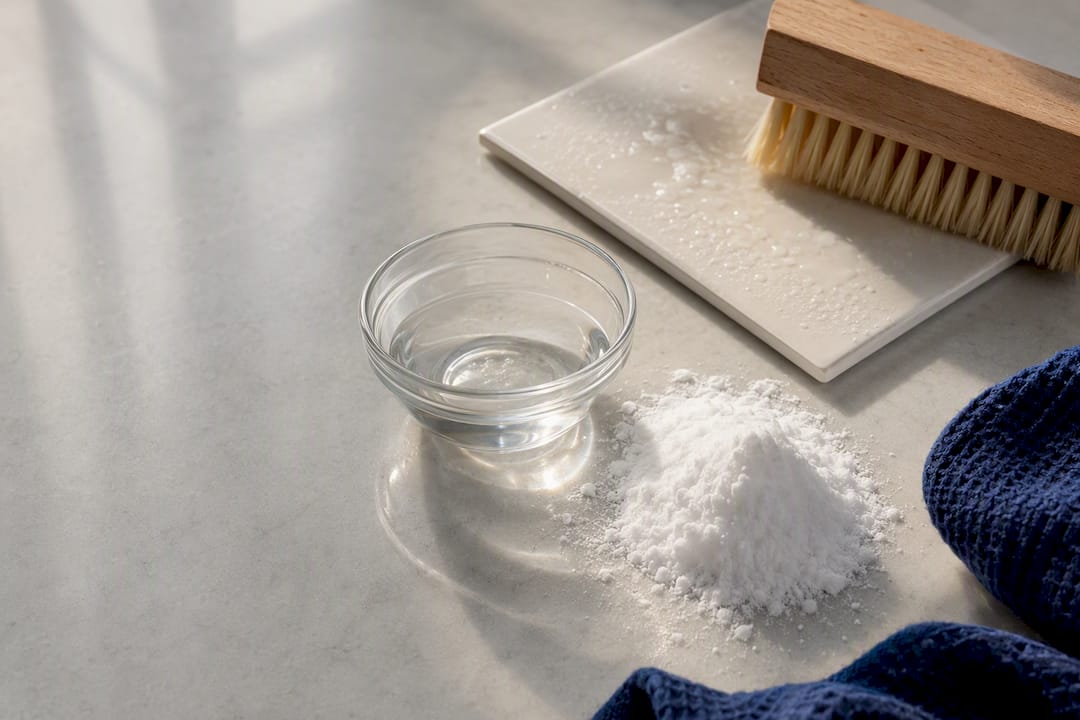
Vinegar and baking soda for household cleaning
Use vinegar for mineral scale, hard-water film, and anything acidic will dissolve; use baking soda for scouring grease and soaking up smells. Mixing the two into one bottle is the one move that usually wastes both, because the fizz you see is mostly a chemical reaction cancelling itself out. The rest of this guide covers the chemistry behind that, which surfaces to keep them away from, and recipes you can use tonight.
***
TL;DR: - Combining vinegar and baking soda wastes most cleaning benefits because their chemical reaction neutralizes their active properties, leaving only water, carbon dioxide, and sodium acetate. - Vinegar is most effective for dissolving mineral deposits on surfaces like kettles, showerheads, and taps, but should be avoided on natural stone and cast iron to prevent damage. - Baking soda works best for scrubbing grease, absorbing odors, and gentle cleaning on surfaces like ovens, grout, and fabrics, but it can scratch polished or coated surfaces if used improperly. - The fizzing reaction from mixing vinegar and baking soda is mostly superficial, providing no stronger cleaning power and mainly useful for mechanically agitating clogged drains. - For deep or heavy cleaning tasks, such as removing stubborn scale or disinfecting, professional services are recommended as DIY solutions cannot replace specialized methods or products.
***
Table of Contents
- Vinegar vs baking soda: the simple chemistry behind the fizz
- When vinegar wins the job
- When baking soda wins the job
- Why mixing them is mostly theatre
- What surfaces to keep vinegar and baking soda away from
- Quick recipes and timings you can use today
- A cleaner's perspective: when DIY is enough and when to call in help
- Need a hand beyond the DIY basics?
- Sources
- FAQ
Vinegar vs baking soda: the simple chemistry behind the fizz
Vinegar is a dilute solution of acetic acid, typically around 4 to 8% in the bottle from your supermarket shelf. Baking soda, or sodium bicarbonate, is a mild base with just enough grit to scrub without scratching most surfaces. They clean in opposite ways: one dissolves, the other scours and absorbs.
When you combine them, the acid and base react and cancel each other out, producing water, carbon dioxide, and a salt called sodium acetate. Research from The Conversation confirms this reaction largely neutralises the active cleaning chemistry in both ingredients rather than boosting it.
Sodium acetate itself isn't a cleaning agent. Its main uses are in heat packs and concrete additives, not on your kitchen bench. So what does the fizzing bottle actually leave you with?
- A weak, watery salt solution with little acid or base left to work
- Carbon dioxide bubbles that dissipate and do nothing mechanically once they escape
- Whatever grease or grime was already loosened by scrubbing, not the reaction itself
When vinegar wins the job
Vinegar's strength is dissolving mineral build up. It's an acid, so it eats through the calcium and magnesium deposits that leave kettles cloudy, showerheads clogged, and taps crusted with white scale. That's the same reasoning behind most vinegar-versus-baking-soda testing you'll find from review outlets, which consistently rate vinegar highest for descaling tasks.
Here's how to put it to work:
- Kettles and jugs: fill with equal parts white vinegar and water, boil, then let sit 15 minutes before rinsing.
- Showerheads: fill a sandwich bag with vinegar, secure it over the head with a rubber band, and leave for 30 minutes to an hour.
- Taps and glass shower screens: spray a 1:1 vinegar and water mix directly onto scale, leave 10 to 15 minutes, then wipe and rinse.
Open a window when you're using vinegar in a closed bathroom. The smell fades but it's sharp while it lingers. And remember it's an acid, not a disinfectant. Don't reach for it if you're trying to kill illness-causing germs after someone's been sick.
Pro Tip: If limescale is really stubborn, don't scrub harder. Leave the vinegar sitting longer instead. Chemistry needs time, not elbow grease.
Vinegar soaking stubborn bathroom limescale
When baking soda wins the job
Baking soda earns its keep on grease, smells, and stains that need gentle abrasion rather than acid. It lifts baked-on grime from oven trays and pots, pulls odours out of an open box left in the fridge, and works into grout lines a sponge alone can't touch. The Spruce notes it's also useful worked into fabric before a laundry cycle to help lift odour from towels and gym gear.
The basic method:
- Mix a paste: 3 parts baking soda to 1 part water, adjusting until it's spreadable but not runny.
- Apply and wait: spread it over the grease or stain and let it sit 10 to 30 minutes. Longer for baked-on grime, shorter for light marks.
- Scrub gently, then rinse: use a soft brush or sponge, working in small circles, then wipe clean with a damp cloth.
Baking soda is a mild abrasive, but "mild" isn't "harmless" on every surface. Skip it on polished chrome, brushed metal, and anything with a coated or lacquered finish; test a hidden patch first if you're not sure.
Why mixing them is mostly theatre
Why mixing them is mostly theatre, overview diagram
The volcano effect looks satisfying, but analysis of the actual chemistry shows why it's not doing what people assume. Once the fizzing stops, you're left with a diluted salt solution, not a stronger cleaner. Detailed stoichiometry breakdowns put the wasted reagent well over 99% in many common viral recipes](https://cleanersguide.co.uk/does-baking-soda-and-vinegar-clean/), depending on the ratios used.
There's one place sequencing genuinely helps: a partially blocked drain. Pour in a cup of dry baking soda, wait a few minutes, then add vinegar. The fizzing agitates loose gunk mechanically as it forms.
- Expect the mechanical fizz to help with light, greasy build up, not a solid clog
- A serious blockage usually needs a plunger, a drain snake, or a plumber, not another bottle of vinegar
- Never pre-mix and store the combination in a sealed container. Trapped gas builds pressure and can force a lid or bottle to burst
What surfaces to keep vinegar and baking soda away from
Both ingredients are cheap and generally safe, but neither is universal. Vinegar's acidity, sitting around pH 2.4 to 3, can etch natural stone like marble and limestone, and it degrades rubber seals over repeated use. Skip it on cast iron seasoning too, since the acid strips the protective oil layer you've built up.
Baking soda's abrasiveness cuts the other way. It's fine on grout and baked-on oven grime, but it can leave fine scratches on polished metal, coated non-stick surfaces, and phone or tablet screens.
- Vinegar: avoid marble, limestone, granite sealant, rubber hoses and seals, cast iron
- Baking soda: avoid polished chrome, anodised aluminium, coated pans, glass screens
- Always test on a small hidden spot first, dilute vinegar before first use, and rinse thoroughly afterwards
Pro Tip: When in doubt about a benchtop or appliance finish, check the manufacturer's care guide before either ingredient touches it. A five minute search beats an etched stone counter.
Quick recipes and timings you can use today
- Limescale spray: 1:1 white vinegar and water in a spray bottle. Soak 10 to 30 minutes, then wipe and rinse.
- Scouring paste: 3 parts baking soda to 1 part water. Sit 10 to 30 minutes, scrub, rinse clean.
- Drain flush: 1 cup baking soda, wait a few minutes, then 1 cup vinegar. Let it fizz, flush with hot water after 10 to 15 minutes.
For anything touching raw meat, chopping boards, or a surface after illness in the house, skip both and reach for a proper disinfectant. CDC guidance is clear that vinegar and baking soda don't meet the standard registered disinfectants are held to, so follow the label's contact time on a product actually built for that job.
A cleaner's perspective: when DIY is enough and when to call in help
DIY handles the small stuff well: a quick descale, a deodorised fridge, a scoured pan. Where it falls short is delicate natural stone, heavy limescale build up, or the standard an end-of-lease clean actually demands. That's usually where a professional deep clean earns its cost, with the right products matched to the right surface and none of the guesswork.
- Shine Wise Cleaning Team
Need a hand beyond the DIY basics?
Vinegar and baking soda cover a lot of ground, but they won't get a rental spotless for a bond inspection or lift a set in carpet stain that's had weeks to settle. That's where professional cleaning services with police-checked teams working to a set checklist rather than trial and error can help, across Canberra and Perth.
Shinewisecleaning
Our teams handle end of lease cleaning to the standard agents actually check for, along with carpet steam cleaning for stains and odours that outlast a baking soda scrub. If a job feels bigger than a spray bottle and a Saturday afternoon, get a quote and see what a professional pass actually costs before you decide.
Sources
- Vinegar and baking soda: a cleaning hack or just a bunch of fizz?
- PubChem: Sodium acetate
- CDC: Cleaning and disinfecting with bleach
FAQ
Which is better for laundry, baking soda or vinegar?
Baking soda works into fabric to lift odour before a wash, while vinegar in the rinse cycle helps cut detergent residue and soften fabric. They serve different steps, so use baking soda for smell and vinegar for rinse-cycle build up, not both in the same load.
What should not be cleaned with vinegar?
Avoid vinegar on natural stone like marble and limestone, rubber seals and hoses, cast iron seasoning, and some metal finishes, since its acidity can etch or degrade these surfaces over time.
Why not mix vinegar and baking soda?
Mixing them triggers a neutralisation reaction that produces water, carbon dioxide, and sodium acetate, a salt with no real cleaning strength. The fizz feels satisfying, but it signals the active acid and base have already cancelled each other out.
What should you not mix baking soda with?
Skip mixing baking soda with vinegar or any other acid in a sealed container, since the gas released can build pressure and force a lid open. Keep it separate and use each on the job it actually suits.
Recommended
Related services
Ready to book your clean?
Free quote · No obligation · Canberra & Perth
Related articles
Stop Overusing Disinfectants: Clean First, Disinfect Only After Illness
Know when to clean, sanitise, or disinfect: clean first, follow label contact times, and when to call a pro after illness.
Read article5 Spots Inspectors Check: Restaurant Cleaning Checklist for Operators
Inspection ready restaurant checklist for operators: two step sign off, printable templates, and the five spots inspectors check.
Read article